Articles
Read the latest

A weekly summary of Canada immigration news for March 2–8, 2026, including Express Entry draw results, provincial nominee program invitations, policy updates for Iranian nationals, Federal Court immigration cases, and important upcoming immigration deadlines.
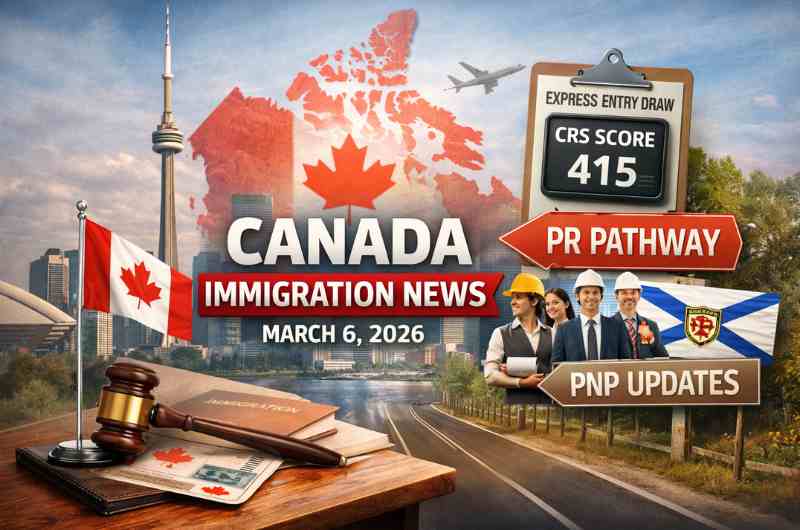
Canada immigration updates for March 6, 2026 include a targeted Express Entry draw for senior managers with a lower CRS score, a new federal pathway offering permanent residence to 33,000 temporary foreign workers, Nova Scotia restructuring its Provincial Nominee Program, and new priority occupations announced under the Rural and Northern Immigration Pilot in Claresholm.
Canada immigration news for March 5, 2026 includes a major Express Entry draw targeting French-speaking candidates, a new Canadian Experience Class draw issuing 4,000 invitations, updates on work permit extensions for Iranian nationals, and growing concerns about labour shortages as foreign workers leave Canada.
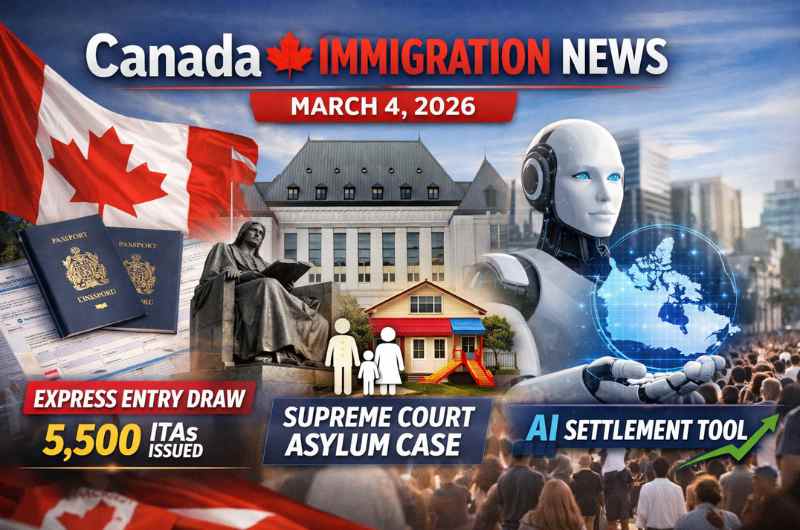
Canada immigration updates for March 4, 2026 include a major Express Entry draw issuing 5,500 invitations, a pending Supreme Court decision on asylum seekers’ access to childcare, IRCC testing AI tools to guide newcomer settlement, and new demographic reports showing immigration becoming the main driver of Canada’s population growth.
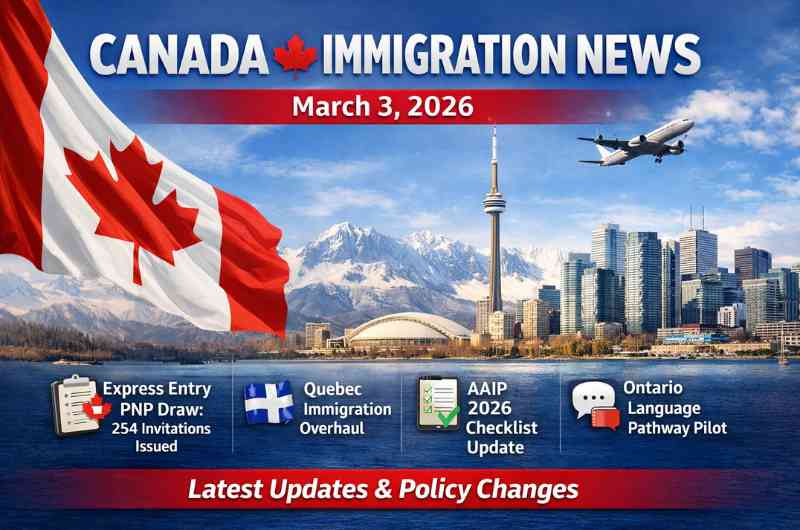
Canada immigration news for March 3, 2026: IRCC invites 264 candidates in a Provincial Nominee Program Express Entry draw, Alberta releases a new AAIP worker streams checklist, Quebec reforms its immigration selection system prioritizing youth and education, Ontario launches a language pathway pilot, and updates to reciprocal employment rules under the International Mobility Program.
Canada immigration news roundup for March 2, 2026. Key updates include the launch of the new Rural Community Immigration Pilot (RCIP) and Francophone Community Immigration Pilot (FCIP), Alberta’s first AAIP draws of 2026, Quebec skilled worker invitations, Federal Court support for Start-Up Visa processing freezes, and policy changes affecting Iranian work permit applicants.
This week’s Canadian immigration developments reflect a tightening focus on decision-making quality, procedural fairness, and system integrity. Federal Court jurisprudence continues to scrutinize unsupported refusals, conclusory reasoning, and failures to meaningfully engage with evidence—particularly in study permits, Start-Up Visa work permits, misrepresentation findings, and H&C assessments involving the Best Interests of the Child (BIOC). On the policy front, Parliament advanced Bill C-12, while IRCC issued substantial operational clarifications affecting PAL/TAL study permits and Open Work Permits for Vulnerable Workers. Provincially, Manitoba, New Brunswick, and Nova Scotia implemented significant program adjustments aligned with labour market priorities and system modernization.
Key Canadian immigration updates for Feb 27, 2026, including Express Entry healthcare-focused invitations, discussions about Quebec’s PEQ program, new projections on non-permanent residents, and major PR invitation numbers for February.
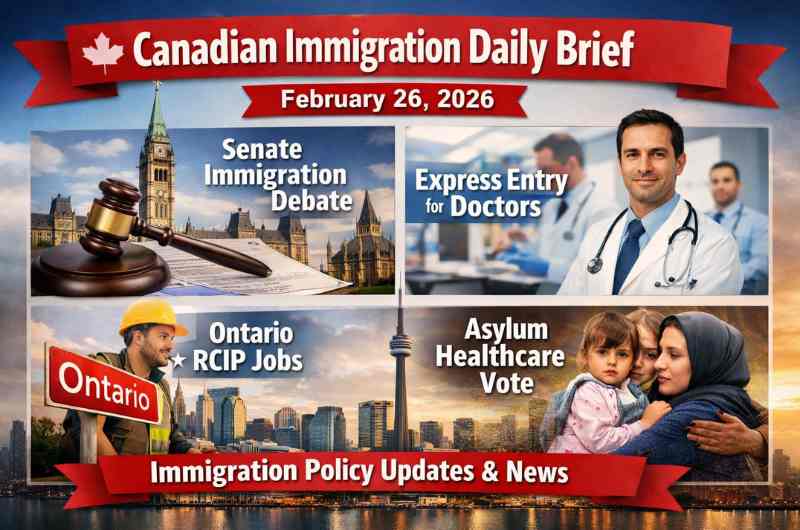
This Canadian Immigration Daily Brief covers the latest policy debates and developments affecting immigration in Canada. Key topics include Senate concerns about proposed immigration reforms, new RCIP pathways to permanent residence in Ontario, healthcare access for asylum seekers, and the challenges internationally trained doctors face after Express Entry invitations.
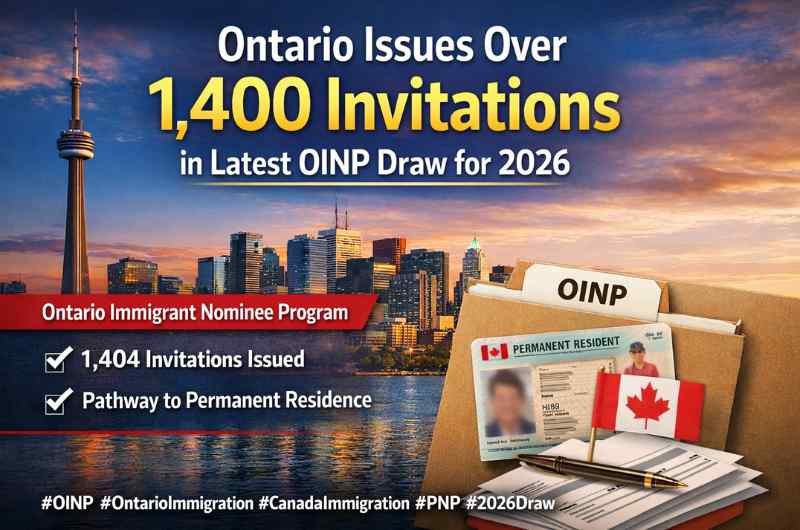
Canada immigration updates for February 25, 2026 include Nova Scotia simplifying its PNP streams, Ontario issuing 1,404 invitations through OINP, new IRCC work permit updates, study permit rule changes for preparatory courses, and Alberta proposing new provincial immigration authority.
Canada immigration updates for February 24, 2026 include a major Express Entry healthcare draw issuing 4,000 ITAs, accelerated IEC 2026 invitations, new IRCC LMIA-exempt work permit changes, Ukrainian families seeking permanent residency pathways, and ongoing political debate over asylum processing and Francophone immigration priorities.
Canada immigration news for February 23, 2026 includes a major Express Entry work experience mandate, Senate warnings over Bill C-12, PEI and Alberta PNP draws, new study permit validity rules, and national immigration policy developments.
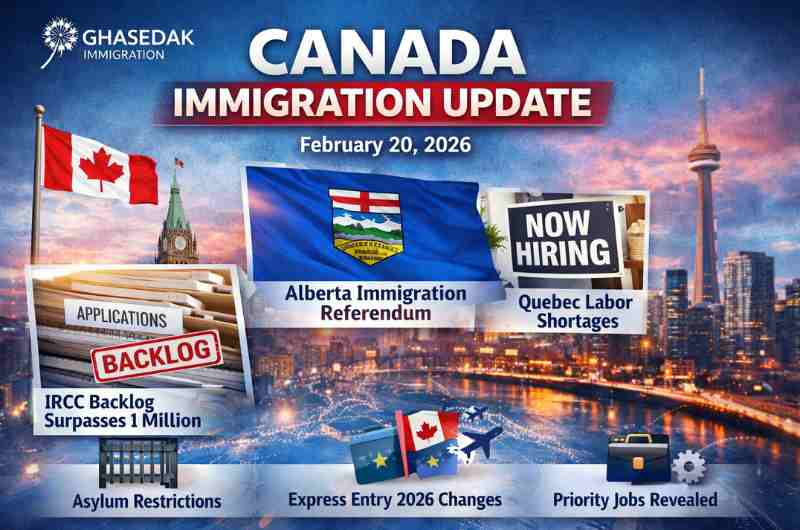
Major immigration developments across Canada: IRCC’s permanent residence backlog passes one million applications, Alberta moves toward an immigration referendum, Ottawa introduces new asylum claim limits, Express Entry 2026 priority occupations announced, and Quebec faces a growing labor crisis. Full breakdown inside.
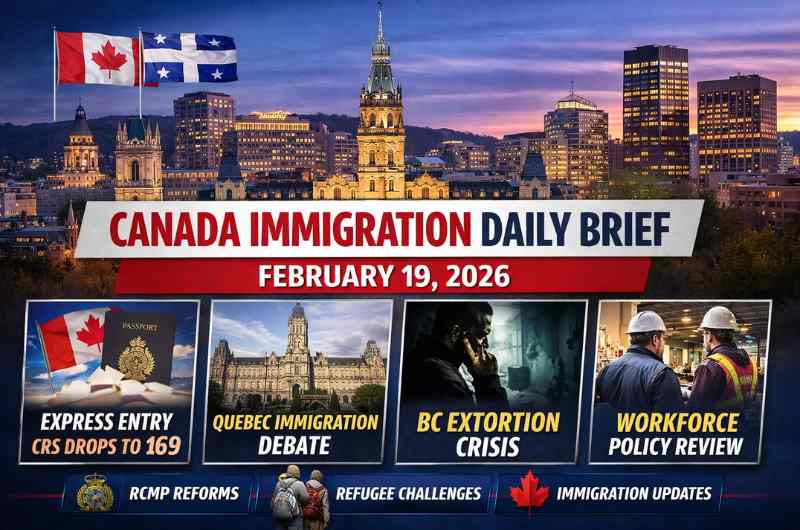
Canada Immigration Daily Brief – February 19, 2026. Major Express Entry draw sees CRS drop to 169. Quebec immigration debate intensifies, BC public safety concerns spark reform discussions, and national workforce pressures renew immigration strategy review.
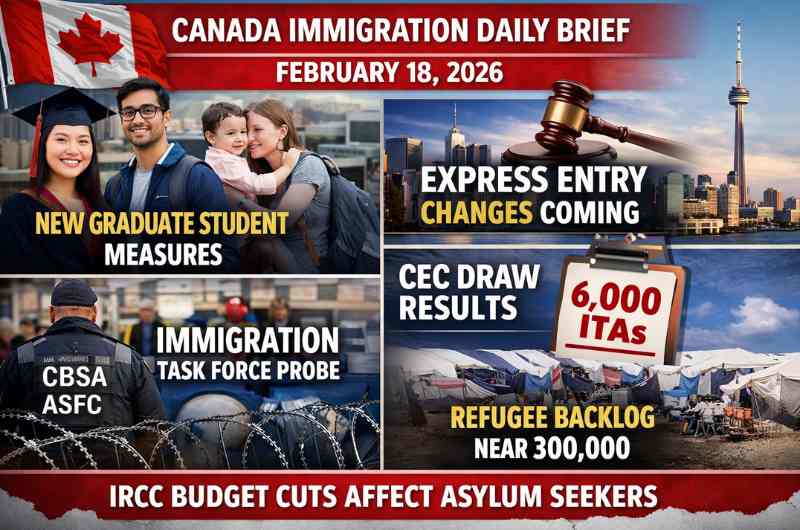
Canada immigration update for February 18, 2026: IRCC issued 6,000 ITAs in a CEC-only Express Entry draw, new graduate student family measures announced, refugee backlog stabilizes near 300,000, asylum seekers face healthcare co-payments, and major Express Entry category changes are expected.
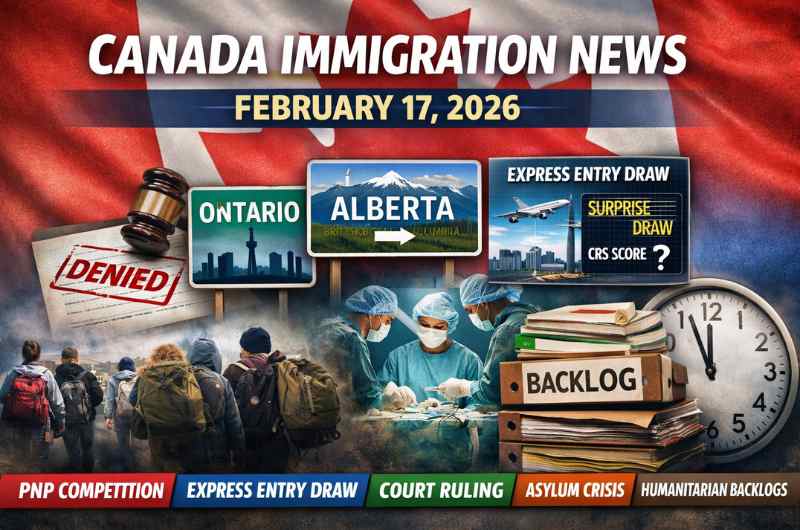
Canada immigration news for Feb 17, 2026 includes a surprise Express Entry draw, increased competition among Alberta, Ontario, and BC PNP pathways, a Federal Court decision on spousal open work permits, asylum system concerns, Quebec healthcare shortages, and major humanitarian application backlogs.
Canada immigration news for February 16, 2026 includes stricter study permit rules, BC PNP issuing 474 invitations, Manitoba skilled worker draw, simplified IEC work permits, and updates on rural immigration pilots. These changes impact temporary residents, PR applicants, and international students.
This week’s Canadian immigration developments reflect a tightening focus on decision-making quality, procedural fairness, and system integrity. Federal Court jurisprudence continues to scrutinize unsupported refusals, conclusory reasoning, and failures to meaningfully engage with evidence—particularly in study permits, Start-Up Visa work permits, misrepresentation findings, and H&C assessments involving the Best Interests of the Child (BIOC). On the policy front, Parliament advanced Bill C-12, while IRCC issued substantial operational clarifications affecting PAL/TAL study permits and Open Work Permits for Vulnerable Workers. Provincially, Manitoba, New Brunswick, and Nova Scotia implemented significant program adjustments aligned with labour market priorities and system modernization.
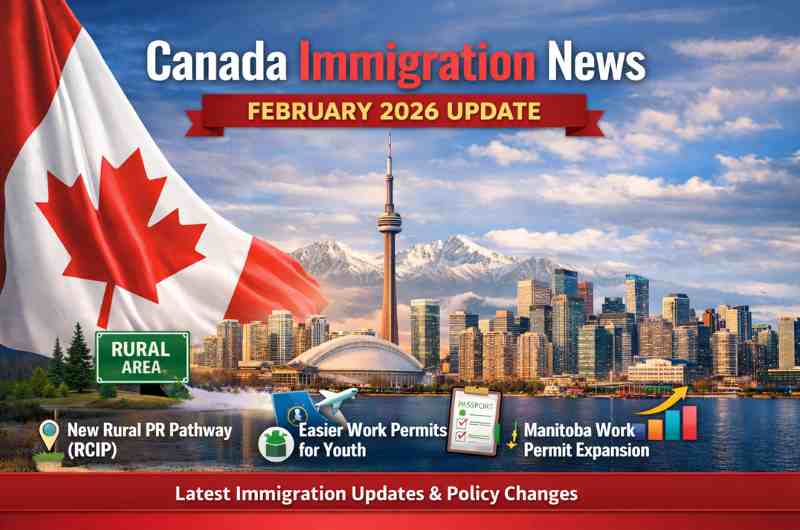
Canada has announced major immigration updates in February 2026, including the new Rural Community Immigration Pilot (RCIP), expanded work permit options in Manitoba, easier IEC renewals, and increased competition in BC PNP. These changes affect foreign workers, permanent residence applicants, and provincial immigration pathways.
Canada has announced major immigration updates in February 2026, including the new Rural Community Immigration Pilot (RCIP), expanded work permit options in Manitoba, easier IEC renewals, and increased competition in BC PNP. These changes affect foreign workers, permanent residence applicants, and provincial immigration pathways.
Canada’s immigration landscape is facing intensified scrutiny and recalibration. From federal policy tightening and mounting national debate, to Quebec’s evolving stance on the PEQ, controversial deportation decisions, Venezuelan asylum challenges, U.S. visa restrictions affecting Canadian professionals, and Alberta’s major immigration draw, February 11, 2026 highlights a system in transition. Political friction, humanitarian concerns, economic priorities, and regional strategies are converging, shaping what may become a defining chapter in Canada’s immigration policy evolution.
Canada’s immigration landscape is entering a period of recalibration. From mounting pressure to create a permanent residency pathway for Ukrainians under temporary measures, to new IRCC study permit cap guidance for 2026, provincial allocation increases in Ontario, policy pauses in Alberta, and intensified political debate over refugee eligibility, federal and provincial actors are redefining both humanitarian commitments and system controls. Meanwhile, Quebec’s immigration reforms continue to generate controversy, and international ripple effects are emerging as Florida responds to reduced Canadian travel amid immigration uncertainty.
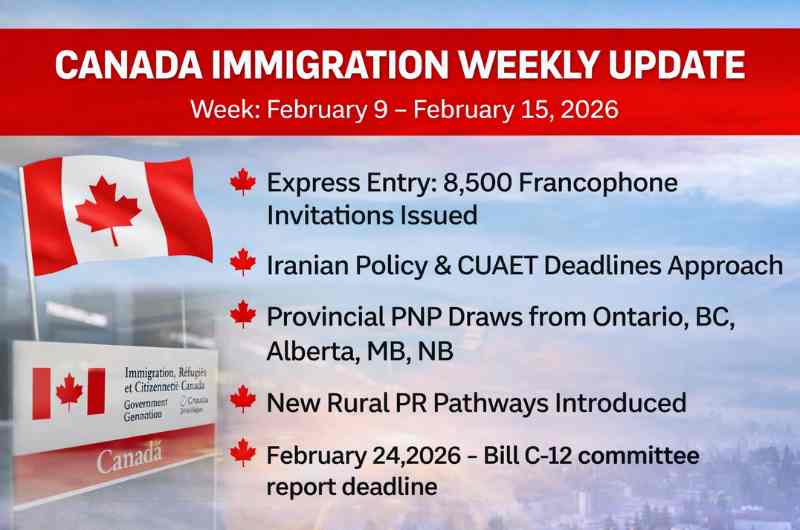
Canada’s immigration landscape continues to evolve through targeted regional programs, major Express Entry draws, and significant provincial reforms. Today’s brief covers the release of North Bay’s 2026 RCIP priority occupation list, a large Francophone-focused Express Entry draw issuing 8,500 invitations, fresh BC PNP results, upcoming changes to Quebec’s immigration system, and renewed warnings on work permit expiries. Together, these developments highlight Canada’s increasing focus on labour-market alignment, language strategy, and proactive compliance in a shifting immigration environment.
This week’s Canadian immigration developments reflect a tightening focus on decision-making quality, procedural fairness, and system integrity. Federal Court jurisprudence continues to scrutinize unsupported refusals, conclusory reasoning, and failures to meaningfully engage with evidence—particularly in study permits, Start-Up Visa work permits, misrepresentation findings, and H&C assessments involving the Best Interests of the Child (BIOC). On the policy front, Parliament advanced Bill C-12, while IRCC issued substantial operational clarifications affecting PAL/TAL study permits and Open Work Permits for Vulnerable Workers. Provincially, Manitoba, New Brunswick, and Nova Scotia implemented significant program adjustments aligned with labour market priorities and system modernization.
Canada’s immigration system continues to reveal sharp contrasts: regions facing depopulation urgently call for more newcomers, provinces expand targeted nominee draws, and humanitarian and enforcement challenges test the system’s ethical boundaries. From Express Entry shifts to provincial overhauls and healthcare fast-tracking, today’s developments underscore a system under pressure to balance economic necessity, fairness, and human dignity.

Canada’s immigration landscape on February 5, 2026 reflects a system under strain and scrutiny: federal authorities reaffirm that asylum cannot be used to evade criminal justice, Quebec faces mounting criticism over PEQ disruptions, Saskatchewan warns of population decline tied to immigration caps, international student enrolment drops sharply, while targeted regional and community programs—from Thunder Bay to Ottawa—demonstrate how localized immigration initiatives continue to deliver tangible results despite broader policy headwinds.

Canada’s immigration landscape opened February with sharp contrasts: while the Destination Canada forum moved forward despite tighter federal signals, provinces and municipalities intensified pressure on governments to balance economic needs with policy restraint. From Immigration, Refugees and Citizenship Canada issuing 423 new Express Entry invitations, to Ontario launching a massive Ontario Immigrant Nominee Program draw, and Quebec municipalities demanding transitional fairness after PEQ reforms, today’s developments underscore a system under recalibration—tightening controls while still relying heavily on targeted immigration to sustain regional labour markets and economic stability.

Canada’s immigration landscape on February 3, 2026 reflects mounting tension between policy design, public sentiment, and operational realities. From sharp ideological criticism of Quebec’s Programme de l’expérience québécoise (PEQ) for prioritizing administrative coherence over political responsiveness, to Ontario’s launch of its 2026 immigration cycle with 1,825 invitations under employer-driven streams, governments are signaling tighter alignment between immigration and economic utility. At the same time, global pressures—from visa service suspensions in Russia to rising antisemitism and public unease across Western societies—are reshaping migration debates. Domestically, nearly half of Canadians now express negative views on immigration, even as IRCC confirms key programs like the Open Work Permit remain active through 2026 and essential workers, including physicians, remain trapped in permanent residency backlogs.
Canada’s immigration system saw major updates on February 2, 2026, with Manitoba issuing 47 invitations in a targeted MPNP draw, Saskatchewan publishing new SINP processing statistics for greater transparency, and IRCC warning international students about visa scams and the serious consequences of misrepresentation, including five-year entry bans. At the same time, Quebec’s strict French test requirements triggered controversy after a family was deported for missing the score by one point, Ottawa responded to intensified U.S. immigration raids, and IRCC announced faster processing for essential work permits—showing how Canada is balancing labour needs, system integrity, and humanitarian expectations.
Canada’s immigration system faced intensified scrutiny between January 26 and 31, 2026, as Federal Court rulings overturned poorly reasoned decisions, IRCC adjusted humanitarian public policies, and CBSA data revealed the scale of enforcement and border integrity efforts. Together, these developments point to a system balancing legal accountability, humanitarian obligations, fiscal sustainability, and heightened enforcement, with growing implications for applicants, practitioners, and policymakers heading into 2026.