Articles
Read the latest
July 20, 2026 — Canada’s latest immigration updates cover major BC and Manitoba PNP draws, permanent residence delays affecting home-care workers, Federal Court challenges to deportation orders, international student program concerns and post-graduation work permit refusals.

July 17, 2026 — Canada’s latest immigration news covers 195 PEI PNP invitations, high demand for Saskatchewan’s intake windows, updated LMIA wage thresholds, Express Entry trends and a significant court ruling on immigration delays.
Canada’s latest immigration news covers the Parent and Grandparent Sponsorship pause, Super Visa updates, new work permit processing times, immigration consultant oversight, OSAP restrictions and important legal developments.
Canada’s latest immigration updates include a record Express Entry week with more than 8,000 invitations, urgent citizenship processing for adopted children, an immigration fraud sentence, cross-border mobility concerns and debate over visa overstays and immigration cuts.
Canada’s latest immigration news covers growing visitor visa barriers, reforms to the international student program, challenges facing migrant workers, citizenship processing delays, skilled-trades shortages and new provincial immigration invitations.
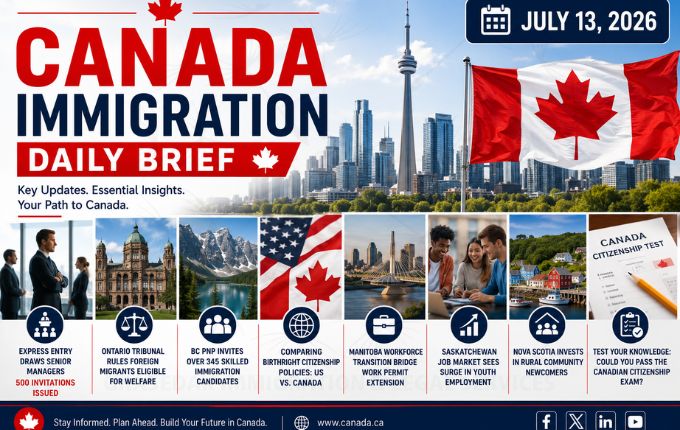
Canada’s July 13, 2026 immigration updates include 500 Express Entry invitations targeting senior managers, more than 345 skilled immigration invitations issued by British Columbia, Manitoba’s Workforce Transition Bridge Work Permit extension, and new developments involving citizenship, social assistance and rural newcomer programs.
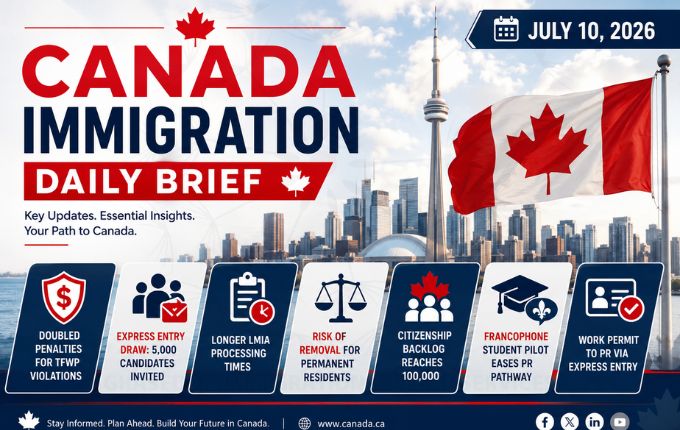
Canada Immigration Daily Update – July 10, 2026 | Express Entry Draw, TFWP Penalties and LMIA Delays
Canada’s July 10, 2026 immigration updates include an Express Entry draw inviting 5,000 candidates, doubled penalties for Temporary Foreign Worker Program violations, longer LMIA processing times, and new guidance on Francophone immigration, citizenship backlogs and the transition from work permits to permanent residence.
Canada’s July 9, 2026 immigration updates include $860,000 in federal funding for Francophone newcomers in the Northwest Territories, shorter processing times for several permanent residence categories, extended work permits for Manitoba provincial nominees, and important court decisions involving refugee exclusion and provincial nominations.
Canada’s July 8, 2026 immigration updates include an Express Entry draw inviting 2,000 Canadian Experience Class candidates with a CRS score of 517, 502 Quebec Arrima invitations, updated Express Entry pool data, stricter immigration consultant regulations and new discussions surrounding refugee healthcare, artificial intelligence and immigration fraud.
Canada’s latest immigration updates include 534 PNP invitations through Express Entry, more than 1,000 AAIP invitations in Alberta, expanded permanent residence pathways for French-speaking students, and new measures affecting international graduates and provincial immigration programs.
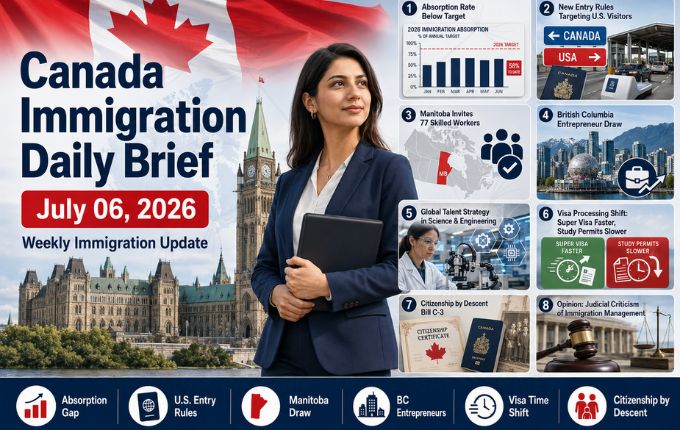
Canada’s latest immigration news includes 77 Manitoba skilled worker invitations, a new BC entrepreneur draw, revised entry rules affecting U.S. visitors, faster Super Visa processing, slower study permits, and broader citizenship-by-descent eligibility under Bill C-3.
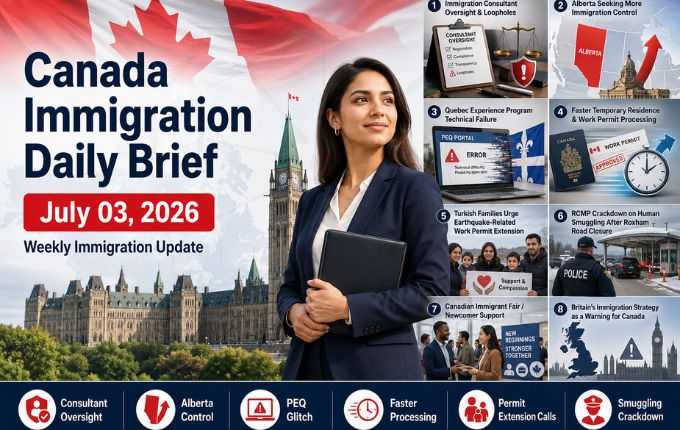
Canada’s latest immigration news includes stricter oversight of immigration consultants, Alberta’s push for greater provincial control, technical problems affecting Quebec’s PEQ reopening, reduced temporary residence processing times, calls to extend Turkish work permits, and new RCMP action against human smuggling.
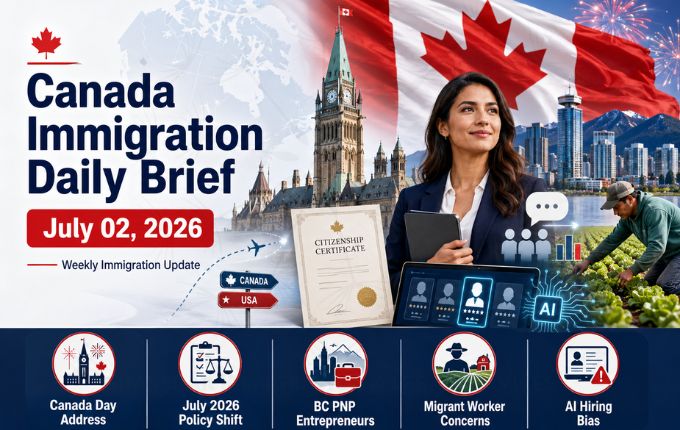
Canada’s latest immigration news includes major July policy reforms, 18 BC PNP entrepreneur invitations, concerns about cuts to migrant workers, citizenship certificate recalls, changing public views on immigration, and potential bias against skilled immigrants in AI-based hiring.
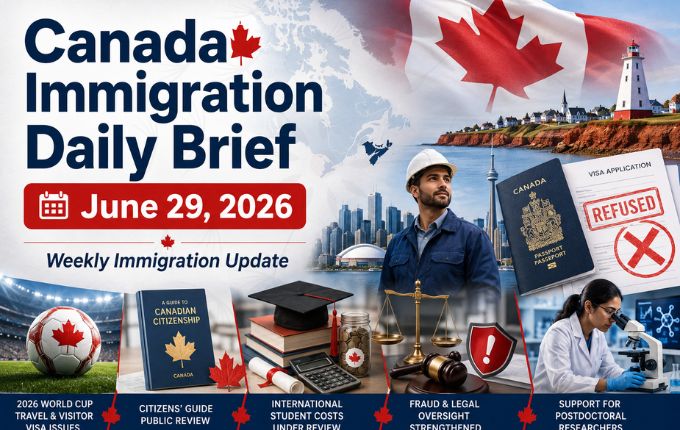
Canada’s latest immigration news highlights demographic challenges in Prince Edward Island, major reforms to Ontario’s foreign worker program, high visitor visa refusal rates, growing concerns about international student costs, and calls for stronger oversight of immigration services.
Canada’s latest immigration update includes a targeted Express Entry draw for healthcare and social service workers, new federal and provincial immigration caps, increased CBSA enforcement, major fraud cases, and reports that more than half of World Cup visitor visa applications are being refused.
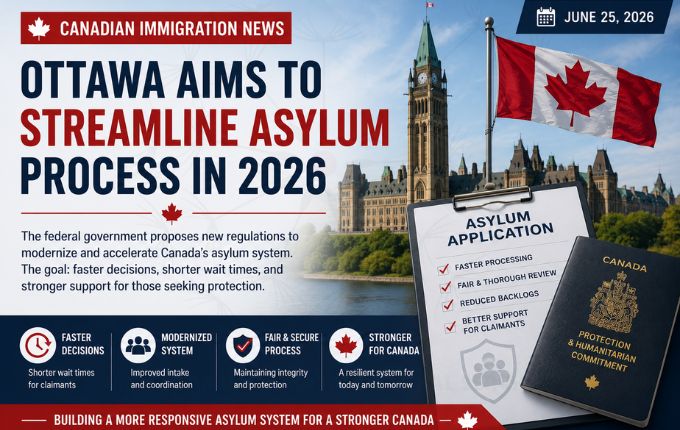
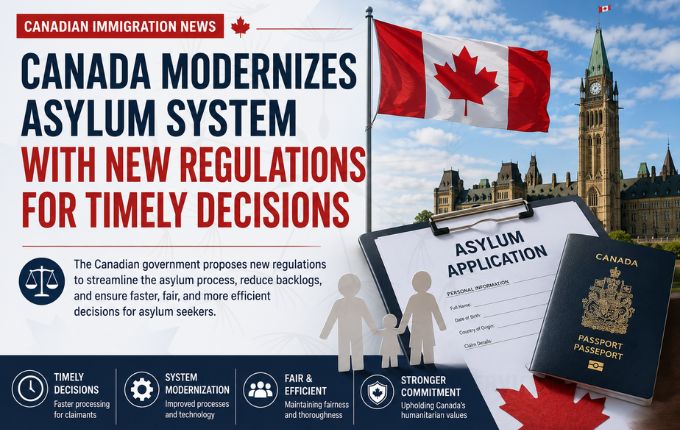
The federal government has proposed new regulations aimed at modernizing and accelerating Canada’s asylum process in 2026. The planned reforms seek to reduce backlogs, improve coordination between immigration authorities, and provide refugee claimants with faster decisions while preserving the fairness and integrity of the system.
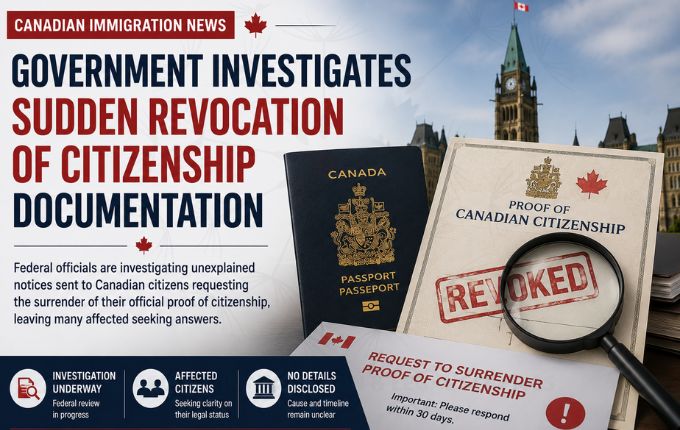
The federal government has launched an investigation after some Canadian citizens unexpectedly received requests to surrender their proof of citizenship. While officials have confirmed the review is underway, the cause of the notices remains unclear, leaving affected individuals awaiting answers about their documentation and legal status.
The Canadian government has introduced proposed regulations to modernize the country's asylum system and deliver faster decisions for refugee claimants. The initiative seeks to reduce backlogs, improve processing efficiency, and provide greater certainty for individuals seeking protection in Canada while preserving a fair and thorough review process.
One year into her mandate, Canada's immigration minister continues to divide opinion. While critics argue her leadership lacks visibility, others believe her reserved approach may be part of a broader long-term political strategy. Here's what the debate means for Canadian immigration policy.
This Canadian Immigration Daily Brief covers key updates from June 19, 2026, including federal citizenship certificate concerns, workplace trafficking warnings, IRCC misconduct reports, Alberta’s new AAIP eligibility tool, refugee advocacy, and cross-border immigration options under CUSMA.
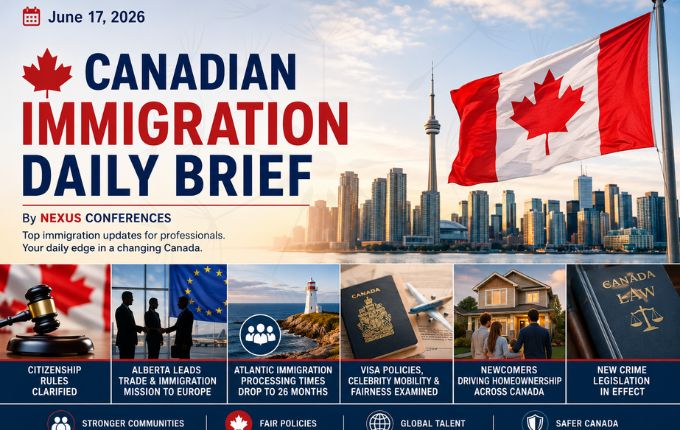
Today’s Canada Immigration Daily Brief covers new clarification on citizenship by descent and Lost Canadians, Alberta’s trade and immigration mission to Europe, Atlantic Immigration Program processing times, visa fairness concerns, newcomer homeownership trends, and other immigration-related updates.
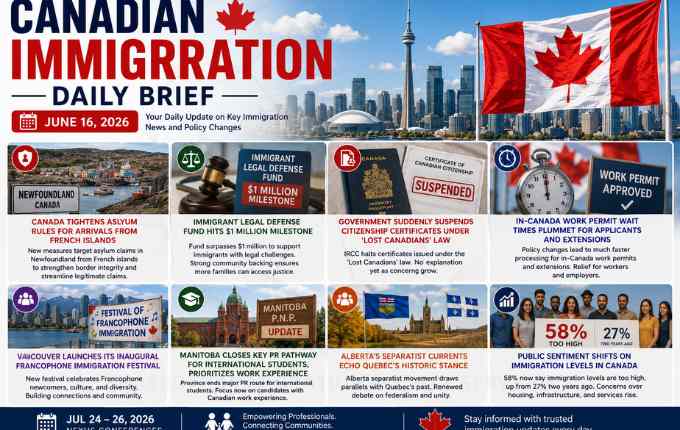
Today’s Canada Immigration Daily Brief covers key updates on Canada’s tightened asylum rules for arrivals from French islands, the suspension of citizenship certificates under the Lost Canadians law, reduced in-Canada work permit wait times, Vancouver’s Francophone immigration festival, Manitoba’s PR pathway changes for international students, Alberta separatism discussions, and changing public sentiment on immigration levels.
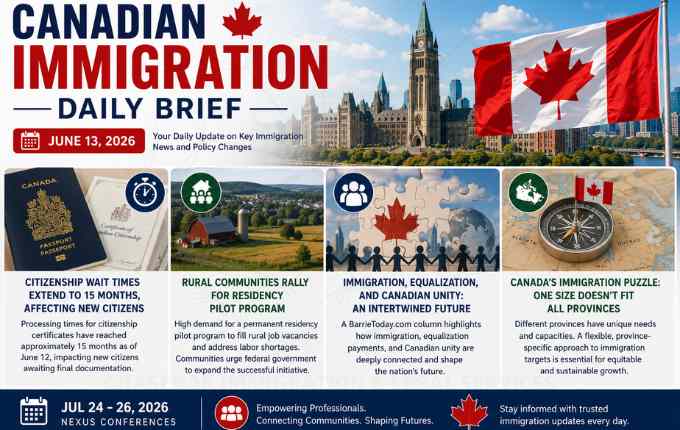
Today’s Canada Immigration Daily Brief covers key updates on Canadian citizenship wait times, growing demand for rural permanent residency pathways, immigration and provincial unity debates, Thomas Partey’s visa denial, newcomer storytelling in Canada, municipal labour shortages, and criticism of Ottawa’s immigration policy direction.
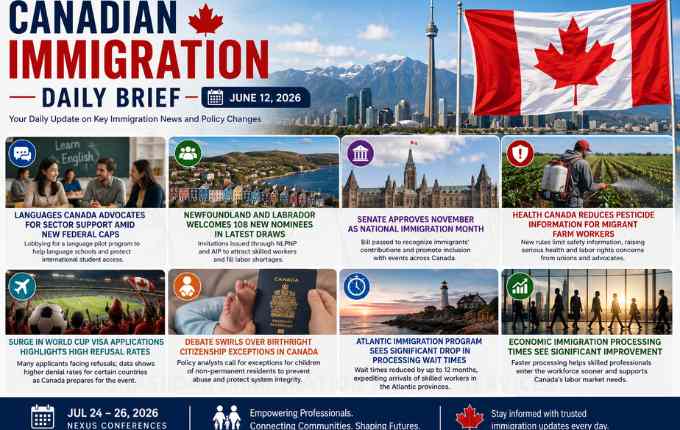
Today’s Canada Immigration Daily Brief covers key updates on Canada’s international student caps, Newfoundland and Labrador immigration draws, National Immigration Month, migrant farm worker protections, World Cup visa refusal concerns, birthright citizenship debate, and improved processing times for AIP and economic immigration applications.
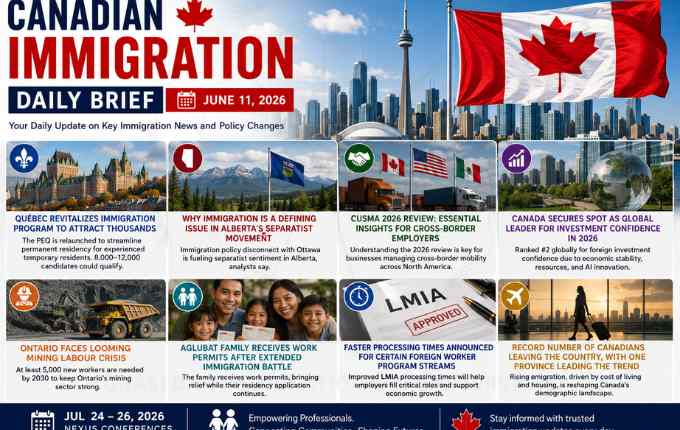
Today’s Canada Immigration Daily Brief covers key updates on Quebec’s renewed PEQ program, immigration’s role in Alberta’s separatist debate, the 2026 CUSMA review, Canada’s investment confidence ranking, Ontario’s mining labour shortage, LMIA processing improvements, and work permit relief for the Aglubat family.
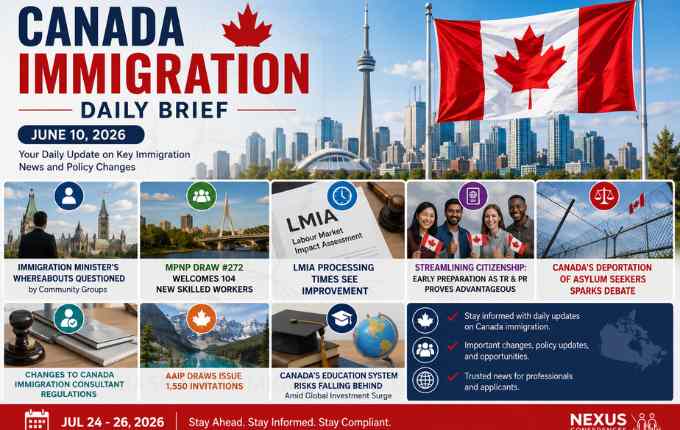
Today’s Canada Immigration Daily Brief covers key updates on Manitoba and Alberta immigration draws, improved LMIA processing times, Canadian citizenship preparation, immigration consultant regulation changes, asylum-related debates, and concerns about Canada’s global education competitiveness.
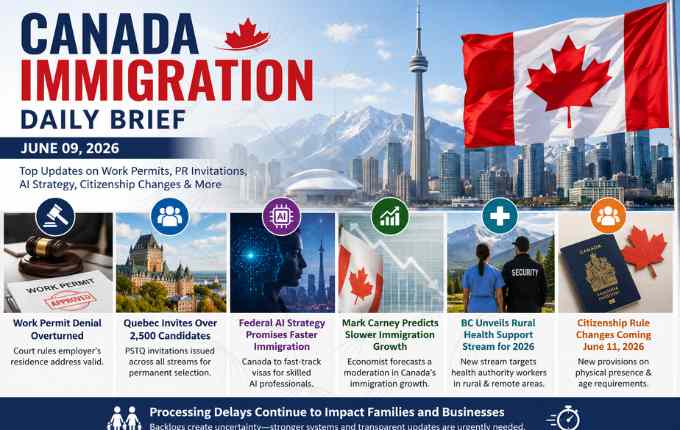
Today’s Canada Immigration Daily Brief covers major updates on work permits, Quebec permanent selection invitations, Canada’s AI talent strategy, immigration growth forecasts, BC rural health support, citizenship changes, and the impact of processing delays on families and businesses.
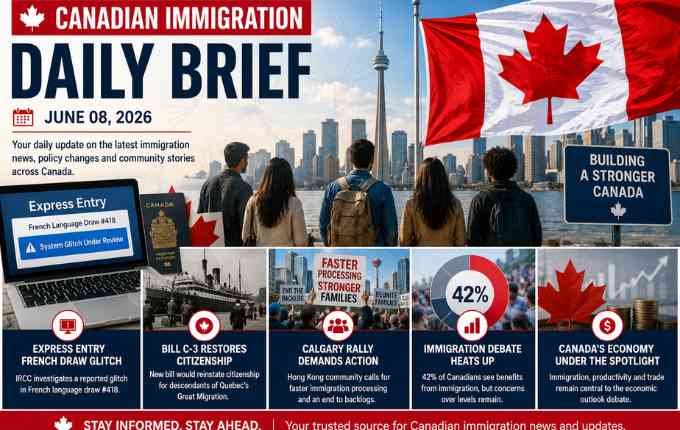
Today’s Canada Immigration Daily Brief covers IRCC’s investigation into an Express Entry French-language draw glitch, proposed citizenship changes under Bill C-3, immigration processing delays, public concerns over immigration levels, and the ongoing debate about Canada’s economy and immigration policy.
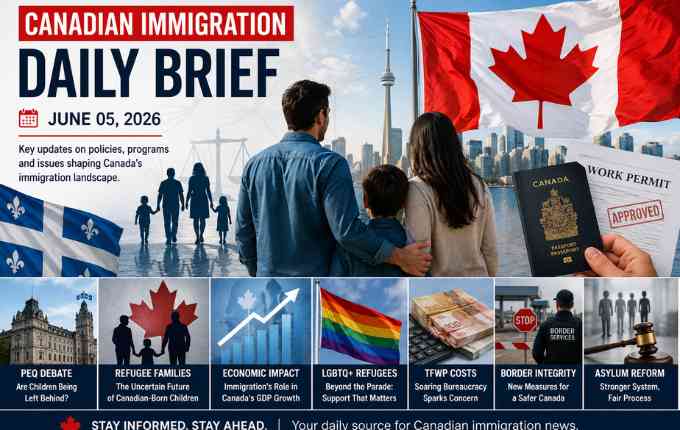
Canada Immigration Daily Update – June 05, 2026 | PEQ, Refugee Families, TFWP Costs & Border Updates
Today’s Canada Immigration Daily Brief covers key updates on Quebec’s PEQ program, refugee families with Canadian-born children, the economic role of immigration, rising foreign worker program costs, asylum policy reform, LGBTQ+ refugee support, and Canada’s border integrity measures.
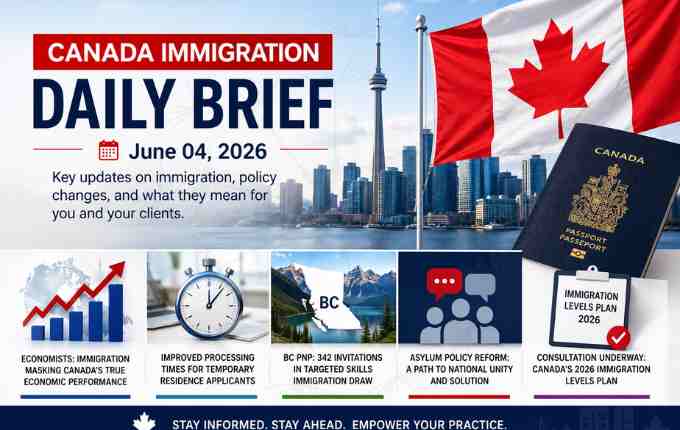
Today’s Canada Immigration Daily Brief covers British Columbia’s latest PNP draw, faster processing times for temporary residence applications, consultations on Canada’s 2026 Immigration Levels Plan, new discussions about asylum policy reform, and economic analyses examining immigration’s impact on Canada's GDP and long-term growth. Stay informed with the latest immigration and policy developments across Canada.