Canada Immigration Daily Update – April 03, 2026
Canada Immigration Daily Update – April 03, 2026
Canada Immigration Daily Brief – April 03, 2026
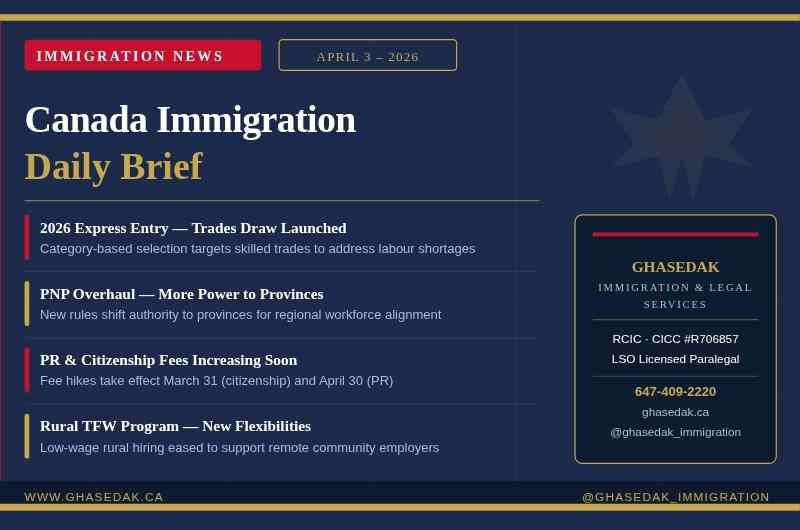
Canada Launches 2026 Immigration Cycle with Targeted Trades Express Entry Draw
Canada has officially commenced its immigration intake for the year 2026 by conducting its inaugural Express Entry draw. This opening round of invitations focuses specifically on candidates with experience in trades occupations, signaling the government’s continued prioritization of skilled workers to address critical labor shortages across the country.
The Express Entry system serves as the primary pathway for federal skilled worker programs. By focusing on trades-specific candidates, immigration authorities aim to bridge the gap in industries that require specialized technical expertise, such as construction, electrical work, and mechanical manufacturing.
This initial draw sets the tone for Canada’s immigration strategy in the new year. As the nation continues to navigate evolving economic demands, the reliance on targeted selection processes ensures that newcomers are matched with the specific sectors where their skills are most needed to bolster domestic infrastructure and productivity.
Prospective applicants and those currently in the Express Entry pool are encouraged to stay informed regarding these category-based selection rounds. As the year progresses, it is expected that Canadian officials will continue to adjust the frequency and focus of these draws based on ongoing labor market analysis and national demographic requirements.
#CanadaImmigration #ExpressEntry #TradesJobs #CanadianEconomy #SkilledTrades
New Provincial Nominee Program Rules Reshape Authority and Application Processing
The landscape of the Provincial Nominee Program (PNP) is undergoing a significant transformation, marking a pivotal shift in how immigration applications are assessed. Under these newly implemented regulations, the balance of power is transitioning, granting provincial authorities a more central role in the selection and evaluation process.
These changes are designed to streamline the way candidates are vetted, allowing provinces to better align immigration efforts with their unique economic and labor market requirements. By shifting more influence to the provincial level, the federal government aims to foster a more responsive and regionally focused immigration system that addresses local talent shortages more effectively.
For prospective applicants, this adjustment means a change in how dossiers will be reviewed moving forward. The updated assessment criteria emphasize regional needs, requiring candidates to demonstrate how their skills directly contribute to the specific demands of the province in which they are applying.
As these new rules take effect, stakeholders are closely monitoring the impact on processing times and candidate selection standards. The move reflects a broader governmental strategy to decentralize immigration oversight, ensuring that provinces have the necessary autonomy to cultivate a workforce that supports long-term regional growth.
Immigrants seeking to navigate these updated pathways should prepare for a process that is increasingly tailored to the individual goals of each province. Staying informed about these procedural shifts is essential for applicants aiming to successfully secure a nomination under the revised regulatory framework.
#PNP #CanadianImmigration #ProvincialNomineeProgram #ImmigrationPolicy #CanadaWorkforce
Alberta’s Proposed Immigration Oversight Act Faces Criticism Over Hiring Challenges
Restaurants Canada has voiced significant concerns regarding the proposed Immigration Oversight Act in Alberta. The organization suggests that the new legislative measures may inadvertently create substantial hiring barriers for restaurant operators across the province.
The restaurant industry in Alberta has been navigating a complex labor landscape, often relying on international recruitment to fill vacancies that local labor markets cannot support. According to the industry association, these new oversight requirements could complicate the recruitment process, making it more difficult for businesses to maintain adequate staffing levels.
By introducing additional administrative layers, the Act could increase the time and financial resources required for restaurant owners to hire necessary personnel. This creates a challenging environment for local businesses that are already grappling with economic recovery and operational pressures.
As stakeholders continue to analyze the implications of this legislation, there is a call for policymakers to consider the unique needs of the hospitality sector. Ensuring that immigration policies remain accessible and efficient is vital for the long-term viability of Alberta’s vibrant restaurant industry.
Industry advocates are urging for a dialogue between government officials and business leaders to address these barriers. Without potential adjustments to the Act, restaurant owners fear they may face chronic labor shortages that could hinder their ability to serve their communities effectively.
#Alberta #RestaurantsCanada #ImmigrationPolicy #LaborShortage #HospitalityIndustry
Canada Introduces New Support Initiatives for Victims of Domestic Natural Disasters
The Government of Canada has officially unveiled a new suite of measures designed to provide critical assistance to individuals and communities impacted by natural disasters occurring within the country. These initiatives aim to streamline the delivery of support and ensure that those displaced or affected by environmental crises receive the resources they need to recover.
Recognizing the increasing frequency and severity of natural disasters, officials have emphasized the importance of a coordinated response. By strengthening the federal framework for emergency relief, the government intends to bridge gaps in existing services and offer more direct aid to affected residents.
The announcement highlights the government’s commitment to prioritizing the health, safety, and economic stability of Canadian citizens during times of crisis. These measures represent a broader effort to improve disaster resilience and enhance the efficiency of federal support mechanisms across all provinces and territories.
Moving forward, the government plans to work closely with local authorities to ensure these support programs are implemented effectively. This collaborative approach is intended to provide a more responsive and adaptable safety net for Canadians facing the unpredictable challenges posed by natural hazards.
#Canada #NaturalDisasters #EmergencyRelief #GovernmentSupport #DisasterResilience
B.C. Premier Urges Federal Review of Controversial Midwife Immigration Ruling
British Columbia’s Premier has formally requested that federal immigration authorities take a second look at a recent decision regarding a midwife. The call for intervention highlights concerns surrounding the current evaluation process for healthcare professionals attempting to gain entry into the country.
The provincial government is emphasizing the vital role that midwives play in the regional healthcare system. By urging a review of this specific case, officials are signaling that current immigration policy may not be adequately reflecting the urgent need for maternal health practitioners in British Columbia.
As the province continues to grapple with staffing shortages across its medical sectors, the outcome of this case could have broader implications. The Premier’s involvement underscores a growing push to streamline administrative hurdles for qualified medical workers seeking to practice in Canada.
#BritishColumbia #ImmigrationPolicy #HealthcareStaffing #Midwifery #BCPolitics
Canada Announces Upcoming Increases to Permanent Residency and Citizenship Fees
The Canadian government has officially announced adjustments to the fee structure for various immigration services. Applicants should prepare for upcoming price hikes that will impact those seeking permanent residency status and those pursuing the path to Canadian citizenship.
Specifically, the fees associated with permanent residency applications are scheduled to increase effective April 30. Individuals planning to submit their applications should review the updated pricing schedules to ensure they are prepared for the additional costs associated with their immigration filings.
In addition to the changes regarding permanent residency, those applying for the right of citizenship will also see a shift in expenses. These particular cost adjustments are set to take effect slightly earlier, beginning on March 31.
These revisions represent a standard adjustment to government administrative processing fees. Prospective applicants are encouraged to verify the specific details regarding their visa category to avoid any potential delays or administrative issues with their documentation during the transition period.
#CanadaImmigration #PermanentResidency #CanadianCitizenship #ImmigrationNews #VisaFees
Canada Introduces Strategic Flexibility for Rural Temporary Foreign Worker Programs
The Canadian government has officially announced a series of new flexibilities regarding the Temporary Foreign Worker (TFW) Program. These adjustments are specifically designed to address the unique economic challenges faced by rural communities across the country as they seek to fill essential roles.
By targeting low-wage positions, the initiative aims to provide businesses in smaller, remote areas with the necessary support to maintain operations and sustain local growth. Officials believe these measures will simplify the hiring process for employers struggling to attract domestic labor in isolated regions.
The changes reflect an ongoing effort by immigration authorities to align national workforce policies with the specific demands of rural labor markets. By lowering barriers, the government hopes to ensure that critical industries in these areas remain competitive and adequately staffed.
Stakeholders and employers operating in rural sectors are encouraged to review the updated guidelines to understand how these flexibilities may impact their recruitment strategies. The rollout is part of a broader commitment to supporting the economic vitality of Canada’s non-urban territories.
#Canada #TFWP #Immigration #RuralDevelopment #LaborMarket #WorkforceSolutions
Analyzing Growing Public and Political Criticism of the Immigration System
The national immigration system is currently facing intense scrutiny as observers and stakeholders voice significant concerns regarding its current efficacy. Recent reports from Global News have highlighted a wave of criticism directed at the policies and procedures that govern how individuals enter and settle within the country.
Critics of the existing framework point to various administrative challenges that have fueled the ongoing debate. These concerns often center on the capacity of current systems to manage demand while maintaining the integrity and timeliness of processing applications, leading to a broader conversation about necessary legislative or procedural reforms.
As public interest in these developments intensifies, the discourse has expanded to include a variety of perspectives on the impact of current immigration trends. Stakeholders continue to weigh in on how these policies affect both the national interest and the individuals who rely on the system to navigate their migration journeys.
#Immigration #PolicyReform #GlobalNews #PublicPolicy #MigrationTrends
Source: NEXUS Conferences & Canadian media sources
Assessment Form: Click here