New Public Policy for Ineligible Refugee Claimants in Canada (2026)
Open Work Permits & PRRA Access Explained
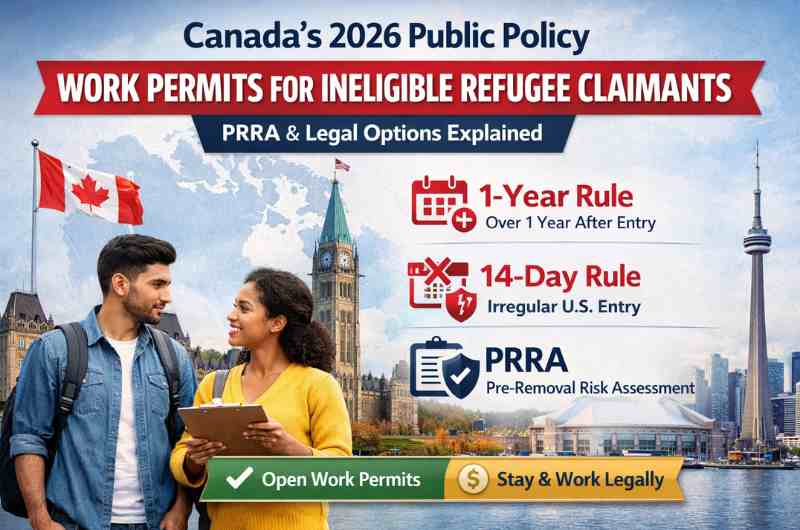
In response to growing pressure on Canada’s asylum system, Immigration, Refugees and Citizenship Canada has introduced a temporary public policy (March 26, 2026) to support certain refugee claimants whose cases are ineligible to be referred to the Immigration and Refugee Board (IRB).
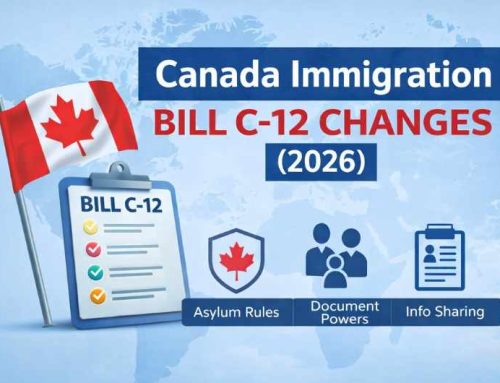
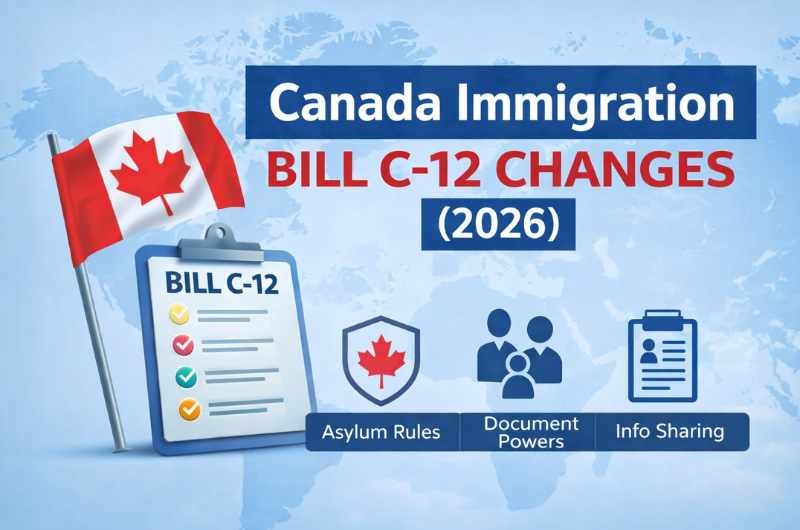
This policy is directly linked to recent legislative changes under Bill C-12 and aims to ensure access to work permits and financial stability for affected individuals.
1. Background: Why This Policy Was Introduced
Canada has experienced a significant increase in asylum claims, creating delays and pressure across the system.
As a result, new legal rules were introduced under the Immigration and Refugee Protection Act to limit certain claims from being referred to the Refugee Protection Division (RPD).
However, these changes created a gap:
- Some individuals became ineligible for a refugee hearing
- They still face risk if removed from Canada
- But they may not immediately qualify for a work permit
This new public policy addresses that gap.
3. New Ineligibility Rules (Key Triggers)
Under the updated law, two major categories of claims are now considered ineligible:
One-Year Rule
- If a person submits a refugee claim more than 1 year after entering Canada (after June 24, 2020)
- Their claim will NOT be referred to the IRB
14-Day Irregular Entry Rule
- If a person enters Canada irregularly from the U.S.
- And submits a claim after 14 days
- Their claim is also ineligible
| Rule |
Description |
Result |
| One-Year Rule |
Claim made more than 1 year after entry (after June 24, 2020) |
Not referred to IRB |
| 14-Day Rule |
Irregular entry from U.S. + claim after 14 days |
Not referred to IRB |
| Outcome |
Claim becomes ineligible |
PRRA may still be available |
Important: These individuals are not removed immediately — they may still apply for a risk assessment.
4. What Happens Instead? (PRRA Pathway)
Even if a claim is ineligible, individuals may still apply for:
Pre-Removal Risk Assessment
This process evaluates:
- Risk of persecution
- Risk to life
- Risk of cruel or unusual treatment if returned
However, there is often a delay before PRRA eligibility is triggered, creating a critical gap.
5. What This New Public Policy Does
This 2026 policy introduces two major solutions:
1. Early Access to Work Permits
Eligible individuals can now:
- Apply for a work permit immediately after their claim is found ineligible
- WITHOUT waiting for PRRA notification
2. Protection of Existing Work Permits
If the person already has a work permit:
- It will NOT be automatically cancelled
- Even when a removal order becomes enforceable
This ensures continuous legal work authorization
6. Who Qualifies? (Eligibility Criteria)
To benefit from this policy, the individual must:
- Have made a refugee claim under IRPA
- Have their claim declared ineligible under section 101(1)
- NOT be excluded from PRRA eligibility under section 112(2)(a)
- Either:
- Apply for a work permit, OR
- Already hold a valid work permit
| Requirement |
Details |
| Refugee Claim |
Must have made a claim under IRPA |
| Claim Status |
Determined ineligible for IRB referral |
| PRRA Eligibility |
Must NOT be excluded under s.112(2)(a) |
| Work Permit |
Either applied for OR already holds one |
| Admissibility |
Must meet all other requirements |
7. Regulatory Exemptions Granted
Under this policy, IRCC officers may waive key requirements, including:
- Requirement to apply for work permits only under strict conditions
- Requirement to prove they will leave Canada at the end of their stay
- Automatic cancellation of work permits upon enforceable removal orders
| Pathway |
Available? |
Notes |
| Refugee Hearing (IRB) |
No |
Claim is ineligible |
| PRRA |
Yes |
Risk-based protection before removal |
| Work Permit |
Yes |
Under new public policy |
| H&C Application |
Possible |
Case-specific |
| Economic Programs |
Possible |
If eligible |
This is done under section 25.2 of IRPA (public policy authority)
8. Practical Impact for Applicants
What This Means for You or Your Client
- You may still stay in Canada legally while awaiting PRRA
- You can work and support yourself financially
- You avoid falling into a “no-status / no-work” gap
- You reduce reliance on provincial assistance
9. Important Considerations
This policy is temporary
- It came into effect after Bill C-12 received Royal Assent
- It can be revoked at any time
It does NOT:
- Grant permanent residence
- Replace refugee protection
- Remove admissibility requirements
10. Professional Insight
For affected individuals, a combined strategy may be appropriate:
- PRRA application
- Work permit under this policy
- Possible parallel pathways (e.g., H&C or economic programs, where applicable)
Each case must be assessed carefully based on:
- Immigration history
- Risk factors
- Legal eligibility