Canada Immigration Daily Update – March 03, 2026
Canada Immigration Daily Update – March 03, 2026

Canada Immigration Daily Brief – March 03, 2026
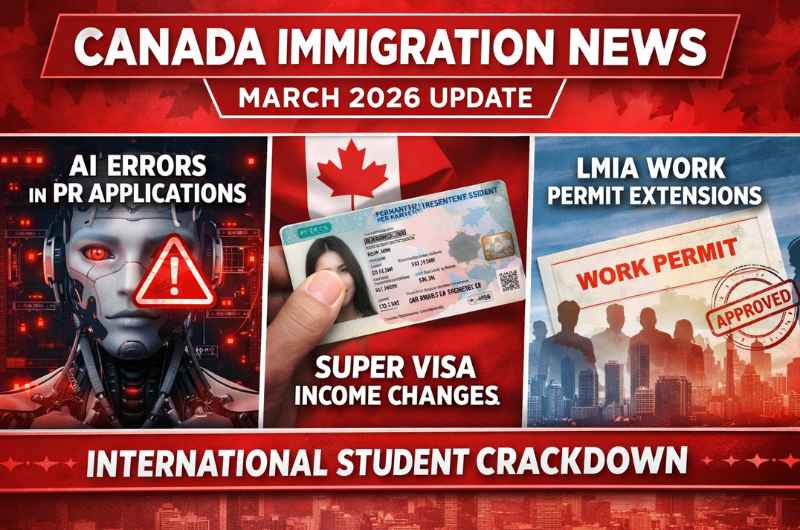
Canada immigration news for March 3, 2026: IRCC invites 264 candidates in a Provincial Nominee Program Express Entry draw, Alberta releases a new AAIP worker streams checklist, Quebec reforms its immigration selection system prioritizing youth and education, Ontario launches a language pathway pilot, and updates to reciprocal employment rules under the International Mobility Program.
Facing Immigration Fraud Allegations: Applicants Finally Share Their Counter-Narrative
A significant controversy is unfolding as individuals accused by the Canadian government of misrepresenting facts on their immigration applications are stepping forward to present their defense. These allegations, which carry serious implications for the applicants’ futures in Canada, have been met with a unified response from those affected, who are now determined to articulate their version of events.
The core of the dispute centers on alleged falsehoods or omissions made during the submission process for various immigration streams. While official bodies have asserted that evidence points toward deliberate deception intended to circumvent established criteria, the accused parties claim a substantial misunderstanding, or perhaps unfair scrutiny, has led to these grave accusations.
These individuals are now seeking to engage the public and relevant authorities with detailed accounts that they believe will clarify their genuine intentions and adherence to the spirit, if not the exact letter, of the immigration guidelines. Their decision to speak out follows a period of intense stress and uncertainty directly resulting from the Canadian government’s accusations.
The narrative being put forth by the applicants suggests a complex interplay of bureaucratic hurdles, interpretation differences regarding documentation requirements, and the pressure inherent in seeking permanent residency or citizenship. They aim to demonstrate that any discrepancies found were not indicative of fraudulent intent but rather procedural errors or honest mistakes.
This developing situation raises broader questions about the transparency and fairness of the adjudication process for complex immigration files. As these applicants present their side, the public and legal communities will be closely watching to see how these challenges to the official findings are received by the relevant government departments.
#ImmigrationAllegations #CanadaImmigration #ApplicationScrutiny #ApplicantDefense #TorontoStar
Canada Invites 264 Candidates in Latest Provincial Nominee Express Entry Draw
Immigration, Refugees and Citizenship Canada (IRCC) recently concluded a significant draw specifically targeting candidates under the Provincial Nominee Program (PNP) stream of the Express Entry system. This focused invitation round resulted in the issuance of 264 Invitations to Apply (ITAs) for permanent residence to eligible individuals.
The recent activity underscores the continued importance of provincial streams in Canada’s overall immigration strategy. The Provincial Nominee Program allows individual provinces and territories to select economic immigrants who meet their specific local labour market needs, thereby ensuring a more balanced distribution of newcomers across the country.
While the specific cut-off score for this particular draw has not been detailed, the focus on PNP candidates suggests that candidates who secured a provincial nomination, which automatically awards 600 additional Comprehensive Ranking System (CRS) points, were the primary target for this invitation round. This mechanism is crucial for ensuring that provincial needs are met through the federal Express Entry system.
This draw adds to the ongoing high volume of invitations being issued throughout the year as Canada strives to meet its ambitious annual immigration targets. The consistent use of Express Entry draws, both general and targeted, remains the primary pathway for skilled economic immigrants seeking to make Canada their home.
#ExpressEntry #PNP #CanadianImmigration #ITADraw #PermanentResidence
Immigration Update: Government of Alberta Publishes January 2026 Checklist for AAIP Worker Streams
The Government of Alberta has officially released the updated document checklist for the Alberta Advantage Immigration Program (AAIP) Worker Streams. The release of this checklist is a crucial step for potential applicants seeking permanent residency through one of Alberta’s provincial nomination pathways.
The document, titled ‘AAIP Worker Streams Document Checklist, January 2026’, serves as a guide for applicants to ensure all necessary forms and supporting documentation are compiled accurately before submission. For candidates in the AAIP, precise adherence to checklist requirements is paramount to avoid delays or rejection of their application during the review process.
Effective January 2026, the new checklist details the specific evidence required for various components of the application. Applicants are strongly encouraged to review the document thoroughly to understand the criteria and prepare their submissions well in advance. This ensures compliance with the most current program guidelines set forth by the Government of Alberta.
#AAIP #AlbertaImmigration #WorkerStreams #CanadaImmigration #ImmigrationNews
Quebec Overhauls Immigration Program, Prioritizing Youth and Education for New Applicants
Quebec is set to implement significant changes to its immigration selection system, introducing a new points-based model that heavily favors certain demographic groups. Under the revised program, applicants who are younger and possess higher levels of education will receive a higher score during the evaluation process. This adjustment signals a clear strategic direction for the province’s future immigration intake.
The updated scoring mechanism directly addresses Quebec’s stated priorities for economic immigration. By prioritizing youth, the government aims to select candidates who can contribute to the provincial workforce for decades to come, helping to mitigate challenges posed by an aging population. Similarly, the increased emphasis on educational attainment is designed to attract highly skilled individuals capable of filling high-demand positions and boosting economic innovation within the region.
The new program represents a substantial shift in how Quebec assesses potential immigrants. The focus on specific criteria like age and educational background reflects a calculated approach to human capital selection, aiming to align new arrivals more closely with the specific needs of the local labor market and long-term economic planning. This move places a premium on candidates who demonstrate a higher potential for rapid economic integration.
#QuebecImmigration #ImmigrationPolicy #EconomicMigration #HumanCapital #QuebecNews
Ontario Launches Innovative Language Pathway Program Pilot
The province of Ontario has officially initiated a pilot program focused on developing new language pathway opportunities for residents and newcomers alike. This strategic move aims to address current gaps in language proficiency that can often serve as barriers to full economic and social integration.
Details surrounding the pilot suggest a tailored approach, likely focusing on sector-specific language training designed to meet the immediate demands of the regional job market. Such programs are crucial for ensuring that highly skilled immigrants and temporary residents can quickly translate their international qualifications into meaningful employment within Ontario.
The implementation of this pilot is viewed by many stakeholders as a proactive step toward enhancing workforce readiness across key industries. By streamlining the process of achieving necessary linguistic benchmarks, the government hopes to reduce onboarding times for employers and boost overall provincial productivity.
While the initial scope and expected duration of the pilot remain under close observation, its introduction signals a significant provincial investment in human capital development. Success in this initial phase could pave the way for a permanent, expanded model for language support services statewide.
#Ontario #LanguagePathway #ImmigrationSupport #WorkforceDevelopment #EducationPilot
Subtle Shift Alters Express Entry’s Skilled Trades Landscape
A significant, albeit quiet, adjustment has recently been made to the Express Entry system, specifically impacting its skilled trades category. This modification, which has gone largely unnoticed by the broader public, holds substantial implications for individuals seeking permanent residency in Canada through these vital professions.
The alteration is described as having “reshaped” the category, suggesting more than a minor tweak. Such a change could influence eligibility criteria, application processing, or the overall prioritization of certain skilled trades within the immigration framework. While the precise details of this quiet transformation remain under scrutiny, its potential to alter pathways for skilled workers is undeniable.
The Express Entry system’s skilled trades category is crucial for addressing labor shortages in key sectors across Canada. Any fundamental reshaping of this category could therefore have far-reaching effects, influencing the pool of talent Canada attracts and the efficiency with which these essential workers can integrate into the economy. Stakeholders and prospective immigrants are likely monitoring developments closely to understand the full scope of this evolution.
#ExpressEntry #SkilledTrades #CanadaImmigration #ImmigrationNews #PermanentResidency
New Travel Rules Leave Dual Canada-U.K. Citizens Stranded and Confused
A recent policy shift regarding international travel has caught a substantial number of dual citizens of Canada and the United Kingdom completely off guard. The implementation of new travel regulations, which appear to have been enacted with minimal advance notice, has led to significant confusion and logistical difficulties for individuals holding passports from both nations. The unexpected changes have affected those planning cross-Atlantic journeys, disrupting travel plans and causing frustration for a demographic that frequently moves between the two countries.
The core issue stems from a lack of clear communication surrounding the updated requirements. Many dual citizens, accustomed to existing protocols for entering Canada or the U.K., found themselves facing new hurdles during their travel attempts. Reports indicate that travelers were confronted with unexpected requirements at departure or arrival points, suggesting that the new rules were not adequately publicized to the affected population before taking effect. This oversight has created a state of uncertainty among those reliant on seamless travel for personal or professional reasons.
For dual passport holders, who often utilize both nationalities for varying purposes and rely on flexible travel arrangements, the sudden introduction of new rules presents specific challenges. The changes may involve altered documentation requirements, pre-travel registration processes, or modifications to standard entry procedures. The resulting disruptions range from missed flights and additional bureaucratic processes to potential entry delays, placing unexpected burdens on individuals and families who were unaware of the regulatory adjustments.
As the situation unfolds, affected dual citizens are attempting to navigate the new landscape and understand the specific requirements for their upcoming journeys. The incident underscores the critical importance of effective public awareness campaigns when implementing changes to international travel policies, especially those impacting large groups of dual nationals. Travelers are now seeking clarification from relevant government and immigration authorities to ensure future compliance and avoid further complications.
#DualCitizenship #TravelRules #CanadaUKRelations #BorderControl #PassportRules #TravelAlert
Canada Refines Rules for Reciprocal Employment Under International Mobility Program
Canada has recently announced significant updates to its guidance concerning reciprocal employment under the International Mobility Program. This move signals a refinement in how foreign workers engaging in exchange arrangements are processed and managed within the Canadian immigration framework. The changes are expected to impact both employers seeking to utilize these provisions and individuals looking to work in Canada through reciprocal agreements.
The International Mobility Program (IMP) facilitates the entry of foreign nationals who are exempt from the Labour Market Impact Assessment (LMIA), often due to Canada’s broader economic, social, or cultural interests. Reciprocal employment, a specific facet of the IMP, typically involves agreements that allow foreign workers to come to Canada in exchange for similar opportunities for Canadians abroad, promoting cultural and professional exchanges. The guidance update likely aims to clarify existing policies, streamline application processes, or address areas of ambiguity that may have arisen since the program’s inception.
For stakeholders, including immigration consultants, employers, and prospective foreign workers, understanding these revised guidelines is paramount. Such updates are regularly implemented by Immigration, Refugees and Citizenship Canada (IRCC) to ensure the integrity and efficiency of the country’s immigration system, adapting it to evolving global contexts and domestic needs. These adjustments play a crucial role in maintaining fair and transparent procedures for all parties involved in international mobility initiatives.
#CanadaImmigration #InternationalMobilityProgram #ReciprocalEmployment #CanadianPolicy #WorkInCanada #ImmigrationNews
Source: NEXUS Conferences & Canadian media sources
Assessment Form: Click here