Canada Immigration Daily Update – January 23, 2026
Canada Immigration Daily Update – January 23, 2026
Canadian Immigration Daily Brief — January 23, 2026
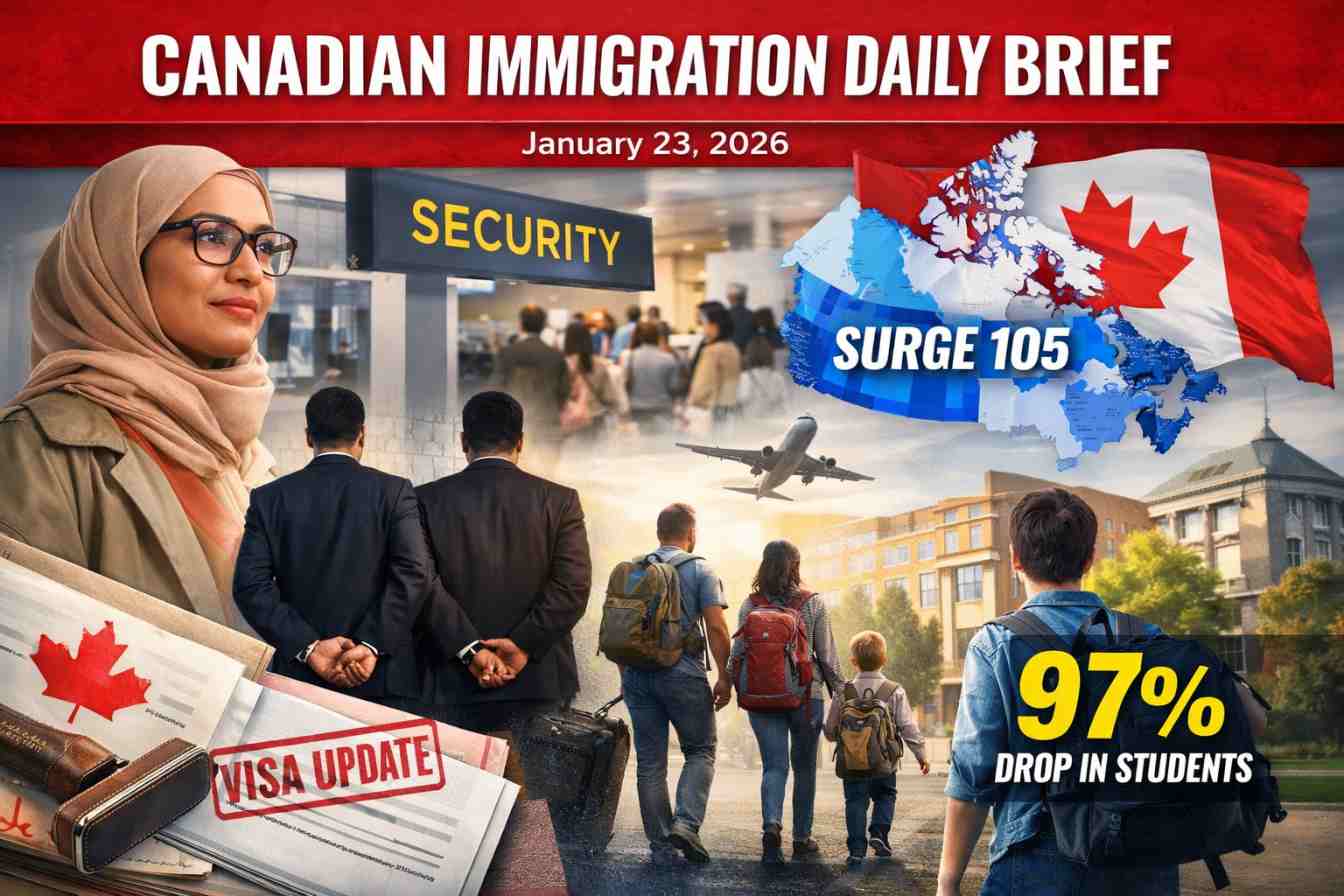
Canada’s immigration landscape saw major developments today, ranging from new national integration policies to alarming shifts in temporary resident numbers. A pan-Canadian strategy was unveiled to better support immigrant women in minority communities, while enforcement actions against non-compliant employers highlighted stricter oversight of foreign worker programs. At the same time, Canada reached a new benchmark in Francophone immigration, reinforcing its bilingual and regional workforce objectives. Updated visa processing times for January 2026 offered applicants improved transparency, even as a serious airport security lapse raised border control concerns. Most notably, new data revealed a sharp decline in international students and temporary foreign workers—including a reported 97% collapse in student admissions—prompting urgent questions about the future sustainability of Canada’s education sector and labour market.
Canada Launches Pan-Canadian Strategy to Support Immigrant Women in Minority Communities
Canada is advancing a new national policy framework aimed at strengthening the social and economic integration of immigrant women living in minority and underserved environments. Described as a pan-Canadian strategy, the initiative reflects a coordinated, nationwide effort to address structural gaps that disproportionately affect newcomer women outside major urban centres or within linguistic minority communities.
Immigrant women often face overlapping barriers, including limited access to language training, challenges with foreign credential recognition, and social isolation. These issues are intensified in smaller or minority-language communities where settlement services may be fragmented or underfunded. The new strategy seeks to standardize access to supports across provinces, ensuring that geography does not determine opportunity.
From a policy perspective, this move signals a shift toward more targeted settlement programming rather than broad, one-size-fits-all approaches. If effectively implemented, the strategy could improve labour force participation, reduce dependency on social assistance, and enhance long-term integration outcomes for newcomer families.
Employers Charged Under Immigration and Foreign Worker Compliance Laws
Two Canadian employers are facing multiple charges for alleged violations of immigration and foreign worker legislation, highlighting intensified enforcement efforts across the country. While details remain limited, the scope of the allegations suggests systemic non-compliance rather than administrative oversight.
Such cases underscore the growing regulatory risks for employers participating in programs involving foreign nationals, including LMIA-based hiring and employer-specific work permits. Penalties in these matters can extend beyond fines to include bans from hiring foreign workers, reputational damage, and operational disruption.
For employers, the message is clear: compliance is no longer optional or lightly enforced. For foreign workers, these cases raise broader concerns about vulnerability, job security, and the importance of verifying employer legitimacy before accepting job offers tied to immigration status.
Francophone Immigration Reaches New Benchmark With “Surge 105”
Canada continues to record strong growth in Francophone immigration, with officials identifying a new milestone referred to as “Surge 105.” This benchmark reflects sustained progress toward federal targets aimed at increasing French-speaking immigration outside Quebec.
Francophone newcomers play a critical role in supporting bilingualism, regional economic development, and labour shortages in sectors such as healthcare, education, and public services. The continued rise suggests that incentives embedded in Express Entry category-based draws and provincial nominee streams are producing measurable results.
From a strategic standpoint, this trend reinforces the government’s long-term commitment to linguistic diversity as both a cultural and economic asset, particularly in provinces seeking to strengthen Francophone minority communities.
Updated Visa Processing Times Released for January 2026
Updated Canadian visa processing timelines for January 2026 have been published, offering applicants clearer expectations across temporary and permanent immigration streams. These benchmarks are particularly significant for individuals planning travel, employment transitions, or academic enrolment in the coming year.
While processing times remain subject to fluctuations based on application volumes and operational capacity, the early release signals an effort by Immigration, Refugees and Citizenship Canada to improve transparency and predictability. Applicants are encouraged to review category-specific timelines carefully and plan submissions accordingly to mitigate delays.
Canada Extends Temporary Residence Measures for Ukrainian Family Reunification
Canada has confirmed an extension of temporary residence access under the Ukrainian Family Reunification pathway, reinforcing its humanitarian response to the ongoing conflict. The extension provides additional time for eligible family members of Canadian citizens and permanent residents to enter, work, and study in Canada.
This decision acknowledges the logistical and emotional barriers faced by displaced families, including documentation delays and travel constraints. By maintaining flexibility within the program, Canada continues to position itself as a key destination for protection and family unity in times of crisis.
Airport Security Failure Allows Passengers to Bypass Immigration Screening
A serious operational failure at a major Canadian airport has resulted in several arriving passengers bypassing mandatory immigration and customs checks. Authorities are currently investigating how individuals were able to exit secure areas without inspection.
This incident has triggered concerns around border integrity, public safety, and procedural reliability. Immigration screening serves as a primary safeguard for national security and public health, and failures of this magnitude often lead to internal audits, policy revisions, and accountability measures within airport and border agencies.
Sharp Decline in International Students and Temporary Workers Raises Policy Concerns
New data indicates a significant downturn in Canada’s intake of international students and temporary foreign workers. These groups have historically been vital contributors to economic growth, labour market stability, and post-secondary funding.
A sustained decline could have cascading effects: educational institutions face budget shortfalls, employers struggle to fill critical roles, and long-term immigration pipelines weaken. Analysts point to regulatory tightening, affordability challenges, and global competition as potential drivers of the trend.
International Student Admissions Collapse by 97%, Triggering Education Sector Alarm
Perhaps the most alarming development is a reported 97% collapse in new international student arrivals over a two-year period. This unprecedented drop threatens the financial sustainability of colleges and universities that rely heavily on international tuition revenue.
Beyond campuses, the broader economy—housing, retail, transit, and local services—stands to lose billions in associated spending. Policymakers are now under pressure to reassess student visa policies and restore Canada’s competitiveness as a global education destination.
Source: NEXUS Conferences & Canadian media sources
Assessment Form: Click here