Canada Immigration Daily Update – February 25, 2026
Canada Immigration Daily Update – February 25, 2026
Canada Immigration Daily Brief – February 25, 2026
Canada immigration updates for February 25, 2026 include Nova Scotia simplifying its PNP streams, Ontario issuing 1,404 invitations through OINP, new IRCC work permit updates, study permit rule changes for preparatory courses, and Alberta proposing new provincial immigration authority.
Nova Scotia Streamlines Immigration for Skilled Workers: What You Need to Know
Nova Scotia has announced significant consolidation across its Provincial Nominee Program (PNP) immigration streams, a strategic move designed to simplify the process for skilled talent seeking to establish residency and employment in the province. This consolidation aims to create clearer, more accessible pathways for individuals whose expertise is crucial to the region’s economic development and labor market needs.
The restructuring is primarily focused on making the navigation of various immigration streams less complex for applicants. Historically, the multitude of separate streams could lead to confusion regarding eligibility criteria and application procedures. By consolidating these pathways, the provincial government intends to enhance efficiency, reduce administrative burdens, and ultimately speed up the processing times for qualified candidates.
This development signals a proactive approach by Nova Scotia to attract and retain the necessary human capital to support key sectors. For prospective immigrants, this streamlining suggests a more straightforward journey from initial interest to final nomination, provided their skills align with the province’s current in-demand occupations. Stakeholders anticipate that this simplification will boost the overall competitiveness of Nova Scotia’s PNPs on the national stage.
ImmigCanada Immigration Consulting Services, as noted in the announcement, is tracking these changes closely. It is vital for potential applicants to understand how these consolidated streams now operate and which specific criteria they must meet under the new framework to maximize their chances of success in securing permanent residency in the Atlantic region.
#NovaScotiaImmigration #PNP #SkilledTalent #ImmigrationStreamlining #AtlanticCanada
Community Groups Demand Answers on Immigration Minister’s Location
A notable silence has descended around Canada’s Minister of Immigration, Refugees and Citizenship, prompting increasing concern and direct inquiry from various community organizations across the nation.
These advocacy groups, deeply involved in settlement services and immigrant integration programs, have expressed a clear need for direct communication and updated strategic direction from the ministerial office.
The current lack of visible engagement or public updates is reportedly creating uncertainty among organizations that rely on federal directives and funding streams to support newcomers navigating the complexities of Canadian immigration.
Community stakeholders are emphasizing that in a period characterized by evolving global migration patterns and ongoing domestic processing backlogs, regular ministerial oversight and transparent communication are crucial for effective service delivery.
The inquiries underscore a wider sentiment that stability and clear leadership are paramount for ensuring that Canada maintains its commitment to welcoming and supporting new residents effectively.
#ImmigrationCanada #MinisterOfImmigration #CommunityAdvocacy #FederalLeadership #ImmigrationPolicy
Northwest Territories Revamps Nominee Program for Immigration
The government of Canada’s Northwest Territories (NWT) has announced significant changes and the official reopening of its Nominee Program. This initiative is crucial for the territory’s economic strategy, aiming to attract skilled workers and entrepreneurs necessary for sustainable growth in the region.
The revamped program is expected to streamline the application process while placing a greater emphasis on selecting candidates who possess skills that directly address current labor market shortages within the NWT. Officials have indicated that the adjustments reflect lessons learned from previous iterations, seeking to ensure that new residents are well-integrated into the local economy and community.
These enhancements are designed to make the NWT a more competitive destination for economic immigrants compared to other Canadian provinces and territories. By tailoring the criteria, the NWT hopes to secure a stable influx of talent, thereby boosting local industries and supporting demographic stability.
Stakeholders across business and community sectors are watching the implementation closely, anticipating that this renewed focus on immigration through the nominee stream will provide the necessary human capital to support ongoing development projects and small business expansion throughout the vast territory.
#NorthwestTerritories #NomineeProgram #EconomicImmigration #CanadaImmigration #SkillsShortage
B.C. Premier Fiercely Criticizes Senate for Holding Up Crucial Federal Immigration Legislation
The Premier of British Columbia has launched a scathing critique against the Canadian Senate, expressing profound frustration over the ongoing delays impacting the passage of vital federal immigration legislation. This governmental impasse is reportedly causing significant concern within the province, which relies heavily on timely federal action to manage its evolving demographic and economic needs related to newcomers.
Sources indicate that the provincial government views the Senate’s deliberate pace as detrimental to established pathways for immigration processing and settlement services within British Columbia. The specific bill under contention is understood to be central to ensuring predictable and effective immigration streams necessary for sustaining growth across various sectors.
The Premier’s public condemnation underscores a growing impatience with perceived bureaucratic hurdles at the federal level. By openly challenging the Upper Chamber, the provincial leader is signaling the urgency with which B.C. views the enactment of this specific piece of immigration policy, suggesting that delays translate directly into real-world consequences for communities and businesses awaiting new residents.
While the exact nature of the Senate’s deliberation process has not been fully detailed in the immediate reports, the Premier’s strong language suggests a fundamental disagreement or significant stalling tactics are preventing the bill from moving forward to royal assent. This confrontation highlights the often-tense dynamics between provincial priorities and the federal legislative timeline.
#BCElection #FederalImmigration #SenateDelay #BCPolitics #ImmigrationBill
Significant Revisions to Canadian Work Permit Regulations Announced by IRCC for RCIP and FCIP Streams
Immigration, Refugees and Citizenship Canada (IRCC) has recently implemented noteworthy updates to the work permit regulations specifically targeting applicants within the Rural and Northern Immigration Pilot (RNIP) and the Federal Agricultural and Food Processing Pilot (FAPFP). These changes are anticipated to impact the application processing and eligibility criteria for individuals seeking to secure employment authorization under these key economic immigration pathways.
The adjustments, as reported by CIC Times, suggest a focused effort by the Canadian government to refine the operational effectiveness and target specific labor market needs addressed by both the RNIP and the FAPFP. While the precise details of every modification require deeper examination of the official IRCC documentation, the announcement itself signals a period of review and potential shifts in submission requirements or procedural timelines for prospective applicants.
The Rural and Northern Immigration Pilot is designed to help smaller, rural, and remote communities attract and retain foreign workers, whereas the Federal Agricultural and Food Processing Pilot aims to address persistent labor shortages within those vital sectors of the Canadian economy. Therefore, any alteration to the rules governing these streams carries significant implications for employers and candidates reliant on these pathways for entry into the Canadian workforce.
Stakeholders, including immigration consultants, employers involved in the pilot programs, and prospective immigrants, are advised to closely monitor official governmental communications to ensure full compliance with the revised frameworks. Understanding these nuances will be critical for successful navigation of the current immigration application landscape.
#IRCC #WorkPermit #RCIP #FCIP #CanadaImmigration #WorkRulesUpdate
Canada Tightens Study Permit Rules for Preparatory Course Students
Recent adjustments to Canada’s study permit regulations have introduced a notable change impacting international students enrolled in prerequisite coursework. This development signals a shift in how immigration authorities view and process permits for those undertaking foundational studies necessary before commencing a main academic program.
Specifically, the initial study permits issued to students who require preliminary courses, often preparatory programs or language training, will now be issued for a shorter duration than previously standard. This targeted approach appears designed to align the permit length more closely with the actual duration of the required preparatory studies.
This adjustment means students must be acutely aware of their program structure. If the prerequisite coursework is short, the initial study permit will reflect that shorter timeline. Consequently, these students will need to secure the necessary documentation to extend their study authorization well in advance of its expiry if they plan to continue with their primary degree or diploma program.
Stakeholders and educational advisors are urging prospective students to carefully review their Letter of Acceptance (LOA) and ensure that the proposed study plan clearly delineates the preparatory phase from the main program phase. Accurate planning is now more critical than ever to prevent any gaps in legal study status upon completion of the initial required courses.
#StudyPermit #InternationalStudents #CanadianEducation #VisaRegulations #PrerequisiteCourses
Alberta Unveils Sweeping Legislative Plans: New Immigration Authority and Major Projects Oversight
The Government of Alberta is poised to introduce significant legislative changes aimed at reshaping provincial control over key areas of economic and demographic development. Central to these forthcoming announcements is the plan to establish new statutory authority over immigration selection processes, a move that signals an intent to tailor provincial intake specifically to meet local labor market needs.
This legislative push represents a notable shift in how Alberta intends to manage population growth and the influx of skilled workers. By seeking direct control over immigration legislation, the provincial government aims to gain greater autonomy in attracting and retaining talent deemed essential for its economic priorities, potentially diverging from federal allocation models.
In a parallel development designed to bolster infrastructure and investment confidence, the province also confirmed plans for the creation of a dedicated ‘Major Projects Office.’ This new centralized body is expected to streamline the regulatory pathway for large-scale capital investments across various sectors, including energy, technology, and manufacturing.
The establishment of the Major Projects Office is intended to reduce bureaucratic friction, accelerate timelines for critical developments, and enhance the province’s attractiveness as an investment destination. Officials suggest this streamlined approach will serve as a crucial engine for future economic diversification and job creation within Alberta.
These combined legislative efforts underscore a strategic push by the provincial administration to solidify its governance over elements directly impacting the province’s economic competitiveness and future workforce composition.
Further details regarding the specific scope of the proposed immigration legislation and the operational mandate of the new Major Projects Office are anticipated in the coming weeks as the government moves toward tabling the necessary bills.
#AlbertaLegislation #ProvincialImmigration #MajorProjects #EconomicDevelopment #AlbertaNews
Carney Asserts Firm Command Over Canada’s Immigration System
The current state of Canada’s national immigration system has been the subject of ongoing public discourse, prompting commentary from key figures regarding its management and efficacy.
In a recent statement, The Prime Minister Carney asserted with confidence that the complex machinery of the country’s immigration framework is currently ‘under control.’ This declaration signals an official assessment that the administrative and operational challenges associated with managing the flow and integration of new residents are being effectively handled by the responsible authorities.
This assertion comes at a time when demographic shifts and labor market needs continue to place significant demands on immigration processes, ranging from temporary worker programs to permanent residency pathways.
The claim of having the system ‘under control’ suggests that recent policy adjustments or heightened administrative focus are yielding tangible results in maintaining orderliness and predictability within the established immigration mandates.
Global News reported on this specific pronouncement, highlighting the official’s perspective amid broader national discussions concerning population growth targets and infrastructural capacities necessary to support them.
Further details regarding the metrics or specific initiatives that underpin this confidence in control remain central to understanding the full scope of the current immigration management strategy.
#ImmigrationSystem #CanadianPolicy #CarneyStatement #ImmigrationControl #GlobalNews
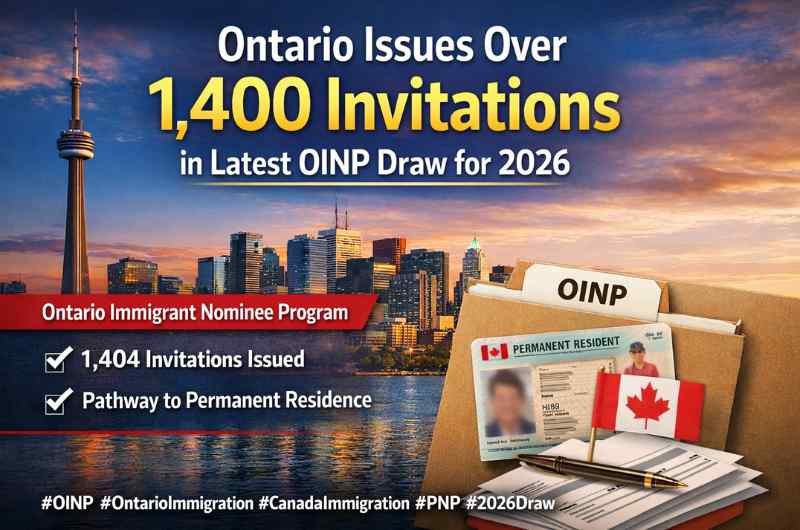
Ontario Issues Over 1,400 Invitations in Latest PNP Draw for 2026 Cycle
The Ontario Immigrant Nominee Program (OINP) has recently concluded a significant draw, extending invitations to a substantial number of candidates vying for provincial nomination under the 2026 immigration cycle.
Official notifications confirm that a total of 1,404 invitations were issued in this latest selection event. This move underscores Ontario’s ongoing commitment to attracting skilled workers and talent necessary to support the province’s economic growth and labor market needs.
While the specific streams targeted in this draw are crucial for applicants to understand, the sheer volume of invitations released suggests a broad-based approach to meeting provincial human capital objectives for the upcoming year. Such large-scale draws are often indicative of the provincial government’s strategic planning in response to demographic shifts and labor demands across various sectors.
Immigration consultancy services, such as ImmigCanada, are closely monitoring these updates to advise prospective applicants effectively. The issuance of these invitations marks a critical juncture for those who have submitted their expressions of interest to the OINP, moving them one step closer to potentially receiving a nomination certificate, which significantly enhances their chances of permanent residence approval through the federal Express Entry system.
#OINP #OntarioImmigration #PNPDraw #Immigration2026 #SkilledWorker
Source: NEXUS Conferences & Canadian media sources
Assessment Form: Click here