Canada Immigration Daily Update – February 19, 2026
Canada Immigration Daily Update – February 19, 2026
Canada Immigration Daily Brief – February 19, 2026
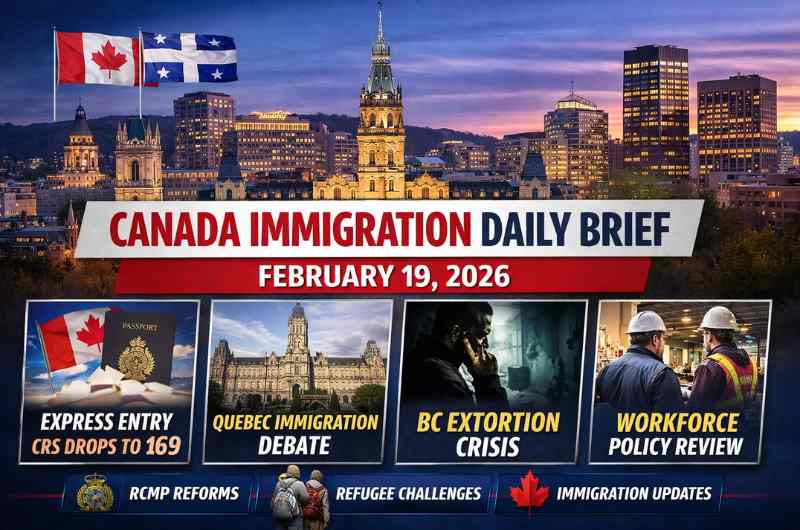
Canada Immigration Daily Brief – February 19, 2026. Major Express Entry draw sees CRS drop to 169. Quebec immigration debate intensifies, BC public safety concerns spark reform discussions, and national workforce pressures renew immigration strategy review.
Harnessing Francophone Immigration: A Strategic and Sustainable Asset for Quebec’s Future
The ongoing discourse surrounding immigration in Quebec consistently highlights the necessity of robust demographic and economic strategies to ensure long-term vitality. Central to this discussion is the concept of leveraging Francophone immigration as a pivotal, strategic lever.
This approach moves beyond simple numerical targets, focusing instead on integrating individuals whose linguistic affinity with the majority culture can facilitate smoother socio-economic integration and bolster the French language’s standing within the province. Recognizing Francophone newcomers as a ‘pérenne’ (sustainable or perennial) asset suggests a commitment to policies that yield enduring benefits, rather than short-term fixes.
For Quebec, maintaining and strengthening its unique linguistic and cultural identity is paramount. By prioritizing immigration streams that align with this objective, the province can proactively address potential societal integration gaps while simultaneously filling crucial labor market needs. This dual benefit solidifies the argument for this specific immigration focus.
Effective implementation requires careful consideration of various factors, including selection criteria, settlement services tailored to the needs of Francophone immigrants, and ensuring their rapid access to professional environments where the French language is the primary medium of work.
#QuebecImmigration #Francophone #StrategicGrowth #LaborMarket #Demographics
Saskatchewan Worker Secures Crucial New Hearing for Work Permit Dispute
A significant development has emerged in the case of a Chinese worker based in Saskatchewan who has been granted an opportunity for a fresh hearing concerning their work permit application. This ruling signals a potential turning point for the individual who has been navigating the complexities of Canadian immigration and employment law.
The case, which has drawn attention from legal practitioners specializing in HR and employment law across Canada, centers on the initial adjudication of the worker’s permit status. Details surrounding the initial denial or complications leading to the current situation remain under judicial review, but the granting of a new hearing underscores the importance of due process in administrative rulings.
Legal experts following the matter suggest that these re-hearings are often critical in cases where procedural fairness or a misinterpretation of evidence may have initially impacted the outcome. For the worker involved, this decision represents a renewed pathway to secure their employment status within the province.
The case highlights the ongoing challenges faced by foreign workers in navigating the often-intricate bureaucratic landscape of Canadian work authorizations. Stakeholders within the Saskatchewan business community who rely on skilled international talent will be watching the outcome closely, as decisions in these high-profile cases often set precedents for future labor immigration processes.
#WorkPermit #SaskatchewanImmigration #HR_Law #ForeignWorker #ImmigrationHearing
Major Cities Unite Against Sudden Immigration Program Termination
A significant coalition has formed between two of Quebec’s largest metropolitan areas, Montreal and Quebec City, as they collectively voice strong opposition to the abrupt termination of a key immigration program.
The decision by the governing body to cease the program without substantial warning or transition has sparked considerable concern among municipal leaders in both urban centers. These cities rely heavily on the influx of newcomers facilitated by such initiatives to support demographic stability and economic growth within their respective regions.
Leaders from Montreal and Quebec City argue that such sudden policy shifts introduce severe instability into their long-term planning, particularly concerning labor markets, housing needs, and essential public services that scale based on population projections.
The joint stance signals a unified front seeking immediate reconsideration or, at minimum, a phased withdrawal from the program to allow stakeholders time to adapt to the changing landscape of immigration pathways available to the province.
#QuebecImmigration #Montreal #QuebecCity #ImmigrationPolicy #MunicipalAction
Major Canadian Immigration Streamline: New Opportunities for Specific Occupations Revealed
The Canadian government has announced significant changes aimed at facilitating the immigration process for individuals holding specific, targeted job titles. This policy shift reflects an ongoing national strategy to address labor market needs by attracting skilled foreign workers into key sectors where domestic supply is currently insufficient.
These adjustments are expected to open up new pathways for thousands of qualified applicants globally who have historically faced complex or restrictive entry requirements. The goal is to expedite the onboarding of essential workers who can immediately contribute to Canada’s economic growth and infrastructure development.
While the precise list of eligible occupations will determine the immediate impact, such moves generally signal a commitment to economic immigration streams, potentially involving Express Entry adjustments or new category-specific draws. Policymakers are carefully balancing the influx of new residents with the need for sustainable community planning and integration services.
Industry analysts suggest that this move could spur an increase in applications from countries with strong ties to these in-demand fields. Furthermore, it underscores Canada’s reputation as a leading destination for skilled professionals seeking stable long-term residency options.
#CanadaImmigration #SkilledTrades #ImmigrationUpdate #WorkInCanada
Urgent National Discussion: Canada’s Immigration Strategy Under Scrutiny Amidst Shrinking Workforce
The national discourse surrounding Canada’s immigration strategy has recently reached a fever pitch, catalyzed by growing concerns over the country’s increasingly constrained labor market. As demographic shifts continue to exert pressure on the working-age population, policymakers and industry leaders are facing renewed calls to critically evaluate and potentially overhaul existing immigration intake targets and criteria.
This intensification of the debate highlights a critical juncture for the Canadian economy. A shrinking workforce inherently threatens productivity levels and the long-term sustainability of essential public services. Consequently, the role of immigration as a primary lever for demographic renewal and economic growth is now being scrutinized with unprecedented detail.
Stakeholders are examining various facets of the current system, including the efficacy of current economic immigration streams in attracting and retaining the specific skills needed across diverse sectors. The consensus appears to be leaning towards the necessity of a nimble and responsive immigration framework that can directly address immediate and foreseeable labor market deficits.
Experts suggest that while raw numbers are important, the quality and strategic alignment of immigration selection programs must be optimized. This involves ensuring that new residents possess the skills that match provincial and territorial labor demands, thereby maximizing their integration into the Canadian economy and minimizing skills mismatch.
Furthermore, the discussion extends beyond mere economic necessity, touching upon the broader societal capacity to absorb new populations efficiently. Infrastructure planning, housing availability, and settlement services are increasingly viewed as integral components of a successful immigration strategy, requiring synchronized governmental planning alongside intake quotas.
#CanadaImmigration #WorkforceCrisis #LaborMarket #ImmigrationDebate #EconomicStrategy
BC Extortion Crisis Ignites Urgent Calls for Immigration System Overhaul
A growing extortion crisis within British Columbia has unexpectedly become a focal point for serious debate regarding the necessary reforms within Canada’s immigration system. The escalating incidents are prompting officials and community leaders to re-examine the criteria and processes through which individuals are granted entry and residency status.
While the specifics of the crisis involve localized criminal activity, the broader discussion has pivoted towards assessing whether current vetting procedures adequately account for potential risks associated with certain immigrant cohorts or those navigating specific pathways into the country. This crisis is forcing a critical, high-stakes review of national security implications layered atop existing immigration frameworks.
Stakeholders are now demanding greater transparency and more rigorous background checks, suggesting that current measures may be insufficient to prevent individuals involved in or vulnerable to organized crime from gaining a foothold in Canadian society. The severity of the ongoing extortion cases is providing a powerful impetus for legislative review.
The discourse is moving beyond mere policing solutions, emphasizing that effective mitigation requires addressing the systemic gaps within immigration intake and oversight. This evolving situation highlights the complex intersection between public safety mandates and the country’s commitment to welcoming newcomers.
#ImmigrationReform #BritishColumbia #ExtortionCrisis #PublicSafety #CanadianImmigration
RCMP Meeting Focuses on Priority Legislative Overhauls: Bail and Immigration
During a recent high-level engagement with the Royal Canadian Mounted Police (RCMP), Commissioner Carney underscored the critical importance of addressing legislative frameworks governing both bail procedures and immigration policies, highlighting these areas as primary areas requiring immediate attention and potential overhaul.
The emphasis on tightening these specific laws signals a strategic alignment between the Commissioner’s priorities and the operational challenges faced by the national police force on the ground. Changes to bail conditions, in particular, often directly impact how law enforcement manages repeat offenders and public safety concerns within various jurisdictions.
Furthermore, the focus on immigration law reform suggests a drive toward enhancing border security measures and ensuring that the regulatory framework supports national safety mandates effectively. These policy discussions are crucial steps in refining operational effectiveness across the vast scope of the RCMP’s responsibilities.
While the full details of the proposed legislative toughening remain under discussion, the clear articulation of these two domains as main priorities signals where the immediate focus of governmental and policing efforts will be directed in the coming legislative sessions.
#RCMP #BailReform #ImmigrationLaws #PublicSafety #LegislativePriorities
Canada Opens Doors to Over Half a Million Displaced Individuals, Yet Few Seek Permanent Refugee Status
Since 2022, Canada has embarked on a significant humanitarian initiative, issuing approximately 575,000 temporary resident permits. These permits have been extended to individuals globally who have been profoundly affected by escalating wars and devastating natural disasters, showcasing the nation’s commitment to providing a safe haven during international crises.
Despite this broad and extensive outreach, a striking trend has emerged within the data. While hundreds of thousands have received temporary residency, only a small fraction of these permit holders have subsequently filed for permanent refugee status. This observation highlights a notable gap between temporary protection and the pursuit of long-term settlement through conventional refugee claims.
The discrepancy between the large volume of temporary admissions and the comparatively low number of refugee applications raises several potential considerations. It might suggest that many recipients view Canada as a short-term sanctuary, possibly intending to return to their home countries once stability is restored, or they may be exploring other immigration pathways that do not fall under the traditional refugee claimant process. This nuanced situation provides insight into the complex motivations and circumstances of individuals seeking temporary refuge.
#CanadaImmigration #TemporaryPermits #HumanitarianAid #RefugeeStatus #GlobalDisasters
Express Entry Draw Results: Lowest CRS Score Hits 169 in February 19 Update
In a significant development for prospective immigrants, a new Express Entry draw was officially conducted on February 19. This latest selection round resulted in the issuance of Invitations to Apply (ITAs) to candidates currently residing within the federal pool, marking another milestone in the ongoing administration of the immigration selection system.
The most striking feature of this particular draw is the notably low Comprehensive Ranking System (CRS) score requirement. According to the data released regarding the February 19 event, the lowest CRS score required to receive an invitation was set at 169. This threshold represents the minimum points needed for candidates to be eligible for selection during this specific round.
As reported by INC News, this update provides essential information for individuals monitoring the Express Entry process. By maintaining a regular schedule of draws and establishing clear CRS cutoffs, the system continues to facilitate the pathway for qualified applicants to transition toward permanent residency based on their specific rankings and qualifications.
#ExpressEntry #CanadaImmigration #CRSScore #ITA #INCNews #ExpressEntryDraw
Source: NEXUS Conferences & Canadian media sources
Assessment Form: Click here