Canada Immigration – Bill C-12 Becomes Law
Canada Immigration – Bill C-12 Becomes Law
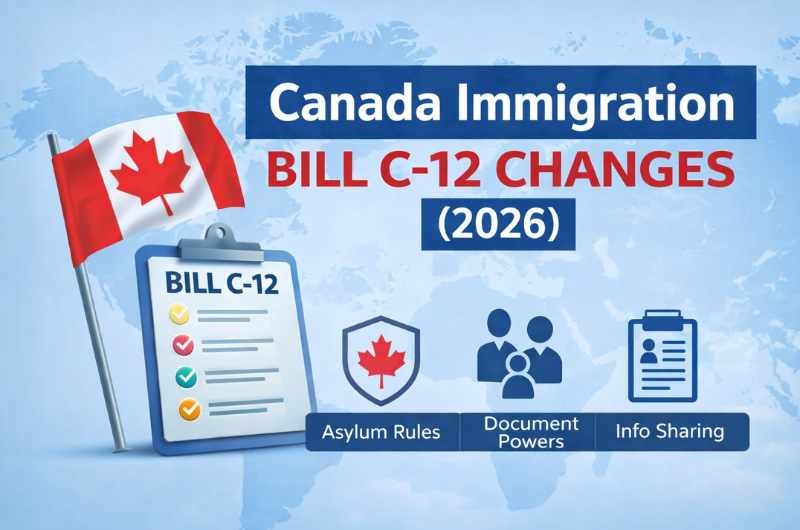
On March 26, 2026, Bill C-12, officially titled the Strengthening Canada’s Immigration System and Borders Act, received Royal Assent and became law in Canada. According to IRCC, the new law introduces major changes in 4 areas: asylum claim eligibility, asylum processing, domestic information sharing, and government authority over immigration documents and related applications.
For asylum seekers, temporary residents, and immigration practitioners, these changes are important because some provisions are already in effect, while others will be implemented through future regulatory amendments.
1. New Eligibility Rules for Some Asylum Claims
IRCC states that two new eligibility rules now apply to asylum claims made on or after June 3, 2025. First, if a person first entered Canada after June 24, 2020 and makes an asylum claim more than one year later, that claim will not be referred to the Immigration and Refugee Board (IRB), even if the person later left and re-entered Canada. Second, a person who entered Canada between ports of entry along the Canada–US land border and made an asylum claim more than 14 days later will also not have the claim referred to the IRB.
IRCC also confirms that people affected by these new eligibility bars may still have access to a Pre-Removal Risk Assessment (PRRA), and that officers will receive guidance regarding the circumstances of unaccompanied minors.
2. Safe Third Country Agreement Is Not Changed by Bill C-12
One important point is that Bill C-12 does not change the application of the Safe Third Country Agreement. IRCC says that people who make a claim at a port of entry along the Canada–US land border, or within 14 days of an irregular entry, continue to be returned to the United States unless an exception or exemption applies.
3. A Modernized Asylum Process Is Coming
IRCC has also announced that, over the coming months, Canada will update the Immigration and Refugee Protection Regulations to modernize asylum processing. These future changes are expected to simplify the online application process, reduce duplicate questions, refer only complete and “schedule-ready” claims to the IRB, and remove inactive cases from the system.
The government also says the new framework will ensure that the IRB only decides claims while the claimant is physically present in Canada. If a claimant voluntarily returns to the country of alleged persecution before a decision is made, the claim may be considered abandoned. In addition, removal orders may become effective on the same day a claim is withdrawn, which could speed up voluntary departures.
4. Expanded Domestic Information-Sharing Powers
Bill C-12 gives IRCC express legal authority to share certain personal information within the department and with domestic government partners. According to the official source, this can include sharing identity information, immigration status, and IRCC-issued documents with federal, provincial, and territorial partners through written agreements. The law also allows easier information sharing between IRCC programs and allows future regulations for broader interdepartmental cooperation.
IRCC says these powers include safeguards. Information sharing must be limited to partners that are legally authorized to collect it, and written agreements or arrangements must be in place. IRCC also says a privacy impact assessment must be completed for any new internal use of personal information.
5. New Government Powers Over Immigration Documents and Applications
Another major part of Bill C-12 is the government’s new authority to manage groups of immigration documents and related applications. IRCC says that, where it is in the public interest, the government may cancel, suspend, or change a large group of immigration documents, pause intake of applications, or cancel or suspend processing. Examples of public-interest grounds listed by IRCC include fraud, administrative errors, public health, public safety, or national security concerns.
However, IRCC also explains that these decisions cannot be made unilaterally by one minister. They require approval by the Governor in Council through an order in council recommended by Cabinet, and decisions must be published in the Canada Gazette and reported to Parliament.
IRCC further clarifies that these powers do not affect refugee protection claims themselves and do not give the government power to grant, change, or revoke immigration status such as permanent resident or temporary resident status.
6. When These Changes Take Effect
The official and secondary source materials both indicate the following key dates:
- June 3, 2025: the new asylum eligibility rules apply to claims made on or after this date
- June 24, 2020: reference date for the one-year rule
- March 26, 2026: Bill C-12 received Royal Assent and became law
- Coming months: regulatory amendments for asylum process modernization are expected
7. Why This Matters
These changes are significant because they narrow access to a full IRB hearing for certain claimants, expand IRCC’s legal information-sharing capacity, and create a framework for broader action on immigration documents in public-interest situations. At the same time, several operational details will still depend on future regulations, officer guidance, and implementation steps.
Final Note
If you are considering an asylum claim, have concerns about your status in Canada, or may be affected by Bill C-12, it is important to obtain legal advice based on your personal facts. Timing now matters more than ever.
Canada Immigration Bill C-12 (2026): Key Changes Explained
On March 26, 2026, Canada introduced major immigration changes through Bill C-12. These changes affect asylum seekers, temporary residents, and immigration applicants across the country.
The table below provides a quick summary of the most important updates and their impact.
| Area | What Changed | Who May Be Affected | Key Impact |
|---|---|---|---|
| Asylum Eligibility | New rules for claims made on/after June 3, 2025: • 1-year rule after first entry (post-June 24, 2020) • 14-day rule after irregular border crossing | Asylum seekers, especially those applying late or after irregular entry | Some claims will NOT go to IRB → PRRA may be the only option |
| Modernized Asylum Process | Upcoming changes: • Simpler online system • Only complete claims sent to IRB • Inactive claims removed • Possible abandonment if claimant leaves Canada | All refugee claimants | Faster processing but stricter requirements and less flexibility |
| Safe Third Country Agreement | No changes under Bill C-12 | Claimants entering from the U.S. | Same rules continue → possible return to U.S. unless exception applies |
| Information Sharing | Expanded authority to share: • Identity info • Immigration status • IRCC documents | All applicants and temporary residents | More coordination between government agencies (with safeguards) |
| Immigration Documents & Applications | Government can: • Cancel or suspend documents • Pause new applications • Stop processing in certain cases | Visa holders, permit holders, applicants | More flexibility for government in cases like fraud, public safety, or emergencies |
| Important Dates | • June 24, 2020: reference for 1-year rule • June 3, 2025: new rules apply • March 26, 2026: law came into force • Future: more regulations coming | Everyone affected by immigration system | Some changes are already active; others still developing |
Key Asylum Eligibility Changes
Important Dates to Know
- These rules apply to claims made on or after June 3, 2025
- The 1-year rule looks at entries after June 24, 2020
| Rule | What It Means |
|---|---|
| 1-Year Rule | If you entered Canada after June 24, 2020 and wait more than 1 year to file an asylum claim, your case will NOT be referred to the IRB |
| 14-Day Irregular Entry Rule | If you entered Canada between ports of entry (e.g., land border) and wait more than 14 days to claim asylum, your case will NOT go to the IRB |
| When Rules Apply | Applies to claims made on or after June 3, 2025 |
| Retroactive Effect | The 1-year rule applies based on your first entry date, even if you left and returned |
For a detailed breakdown of asylum eligibility rules under Bill C-12, read our full guide here → IRCC
Assessment Form: Click here